In short
- Ask who the toy is for and the occasion on the Thank you page. A parent and a collector need different emails.
- Add "A child asked for it" to where buyers first heard of you, because many toys are picked from a video the buyer never saw.
- Check in after the occasion, not on delivery day.
What makes toys and games different
Adults pay for toys, and more of them buy for adults. In Circana's first half 2026 report , households without children made up 55% of US toy sales. Toy sales for adults 18 and older grew 25%, more than any other group.
Many orders are gifts with a date. In the UK, Christmas accounts for 23% of annual toy sales, according to Circana . Gift buyers plan, too: Circana found that 95% of gift purchases are considered in advance. Two weeks of comparing building sets shows up in your reports as one direct visit.
The idea often starts with the child. Circana's 2026 Global Toy Report says Gen Alpha finds toys through online content, creators and social platforms. The child watches the video, the adult pays, and no pixel links the two.
What your reports miss
Your analytics show the last click and the cart. They cannot show who the toy was for, the occasion, or whether it still gets played with a month later. Only the buyer knows them, and they decide what you stock, when you email and which creators you work with. Here is how to ask the first question and read the responses.
The questions to ask
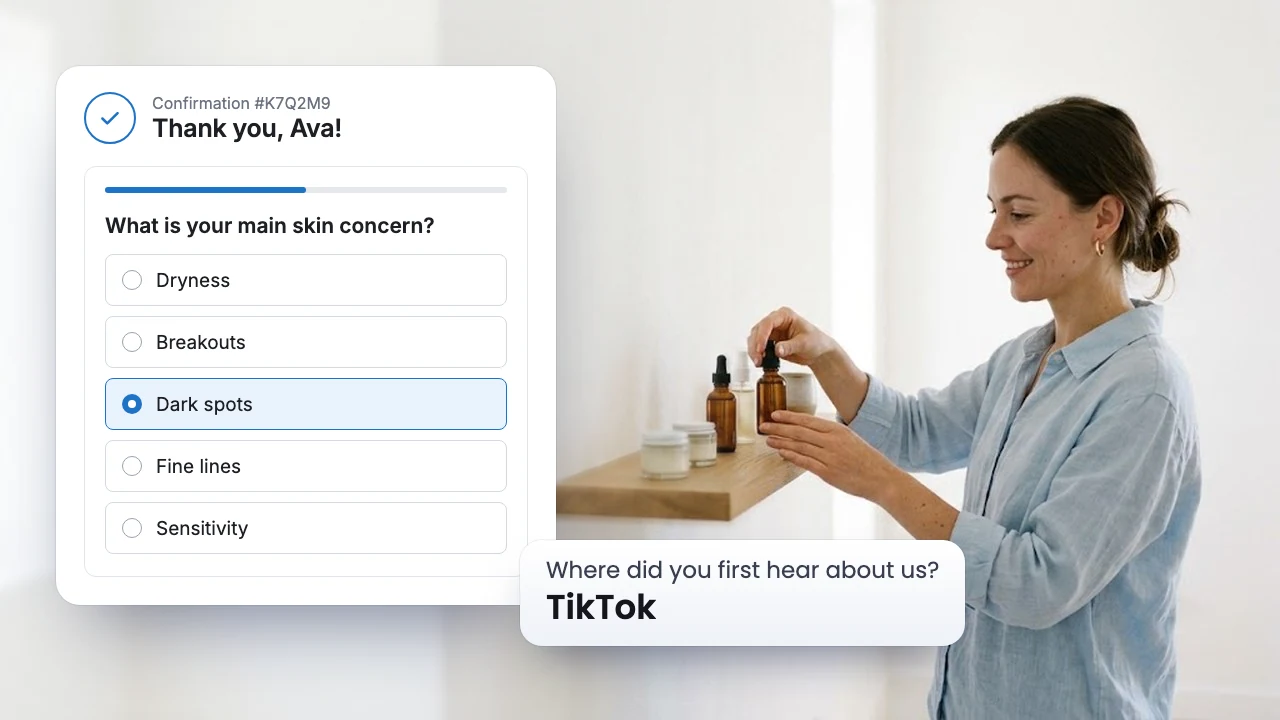
1. Where did you first hear about us?
- Why it matters: A child sees a toy on YouTube and asks for it by name. The parent searches Google, and the video gets no credit.
- If many pick "A child asked for it": On the Growth plan, branching shows a Short answer follow up only to those buyers, asking which video or show it came from. Then reach out to the channels that keep coming up.
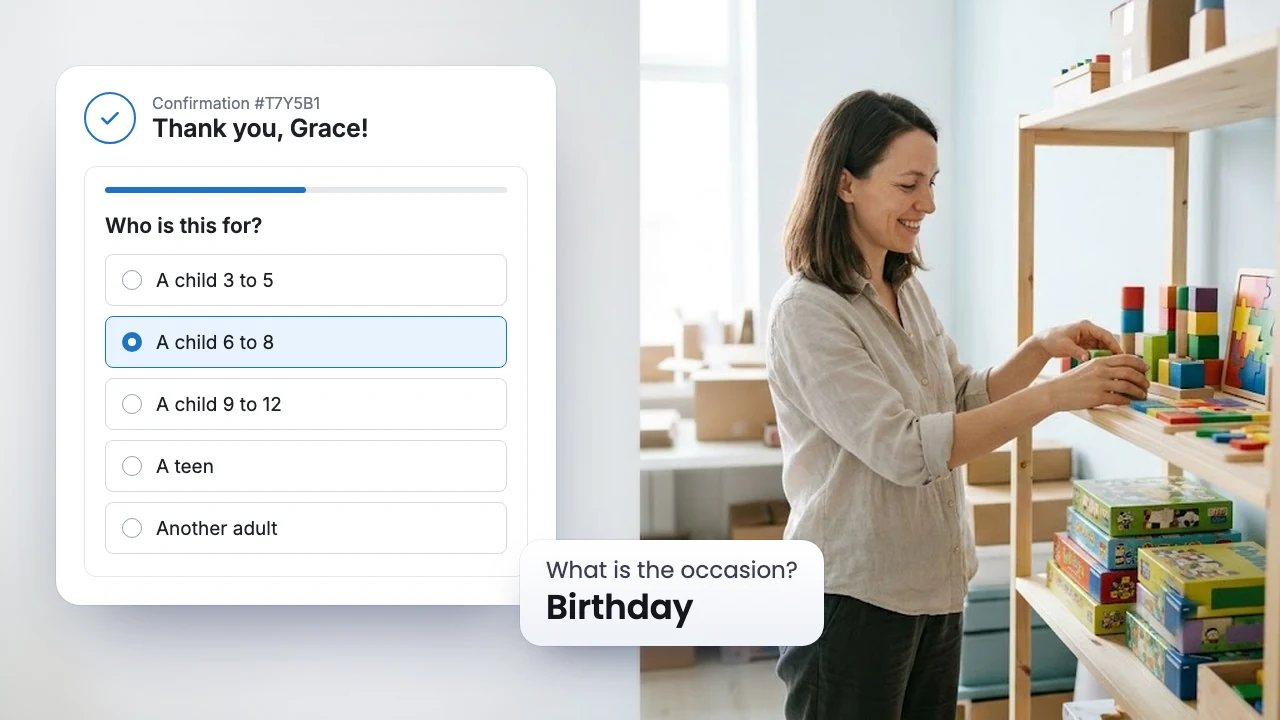
2. Who is this for?
- Why it matters: One tap gives you the age band, and shows how many orders are for adults.
- If "Me" or "Another adult" is a large group: Write emails for collectors too, with new releases and expansions. On the Growth plan the response lands on the buyer's Klaviyo profile, so each age band gets its own flow.
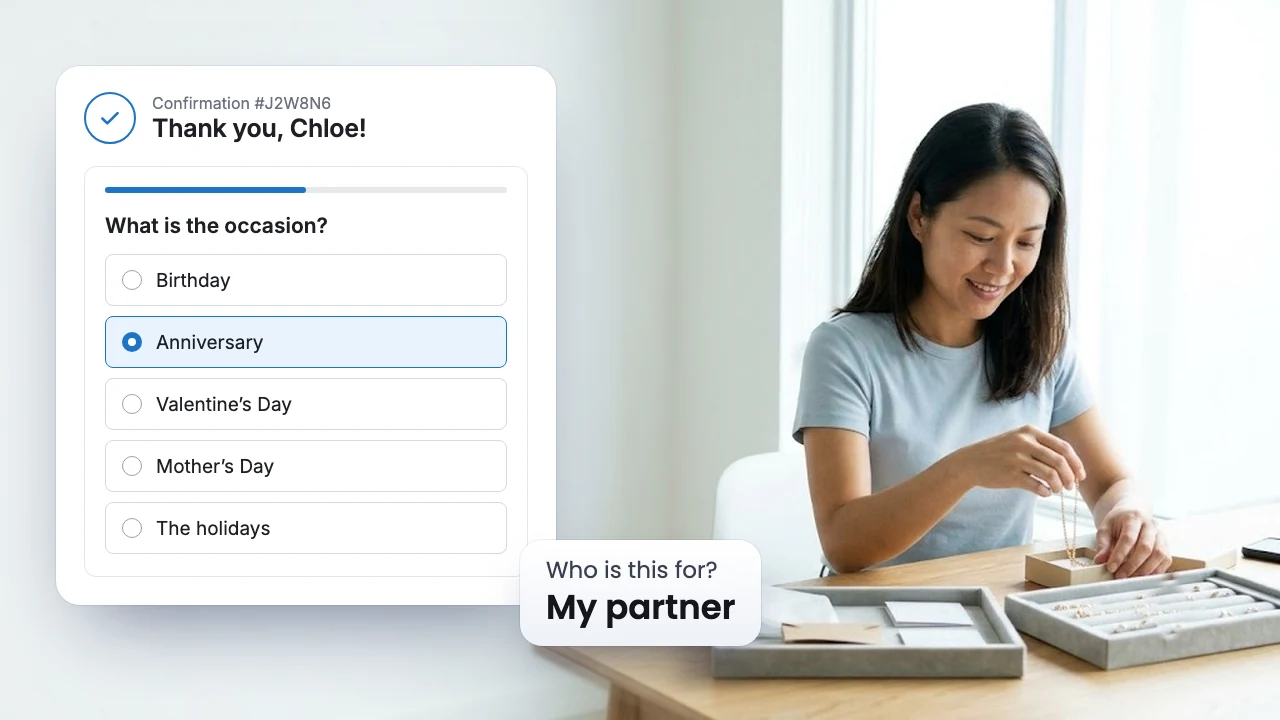
3. What is the occasion?
- Why it matters: A birthday order placed in March points to a birthday around next March, without asking for a date.
- If birthdays lead: Tag those customers with the Sea Survey Submitted trigger in Shopify Flow. Then build an email flow that waits about 11 months and shows gifts for the next age band.
4. What almost stopped you from buying?
- Why it matters: A gift buyer is guessing for someone else. This names the doubt your product page did not settle.
- If most are not sure it suits their age: Put the age range and a photo of the toy in use near the price. If they doubt the recipient would like it, add a gift quiz. SEA Survey includes one on every plan.
5. Is it being played with?
- Why it matters: Reviews written on delivery day judge the box. This response comes after the play.
- If one product gets many "Not really": On the Growth plan, a Short answer follow up asks those buyers what went wrong, and AI groups the written responses into topics. If they say it is too hard, change the age range.
When to ask
In SEA Survey, the post purchase email waits until the order ships, then for the delay you set in days. Our advice for toys and games:
| Moment | Question | Why then |
|---|---|---|
| Thank you page | Where did you first hear about us? | The buyer still remembers the video or the wish list |
| Thank you page | Who it is for, the occasion, what almost stopped you | The reasons are fresh, and it takes three taps |
| Email about 3 weeks after the order ships | Is it being played with? | Most gifts have been opened and tried by then |
In November, raise the delay so holiday orders get the email in January.
Example: what a board game brand would do
This example is made up to show the steps. Your own responses decide.
Say you sell family board games and run ads on Google Shopping. The Thank you page survey shows many buyers picking "Me" or "Another adult", with "Game night or a party" as the occasion. Parents buying for ages 6 to 8 mostly pick birthday, and doubt whether the game suits the age.
That gives you three moves. Add a game night section for adults to the product page. Put "Ages 6 and up, 20 minutes a round" near the price. Tag the birthday buyers in Shopify Flow, and show them a game for ages 8 and up about 11 months later. The check in then tells you which games stay on the table.
Mistakes to avoid
- Asking about the child instead of the buyer. Ask the adult for an age band and an occasion, never a child's name, photo or birth date.
- Checking in before the occasion. A gift ordered in November is still wrapped in December.
- Leaving out "A child asked for it". Those buyers then pick Google search, and the video gets no credit.
FAQ
How many questions should a toy store ask?
Three or four on the Thank you page, and one in an email after the occasion. Each extra question means fewer buyers finish.
Should I ask for the child's birthday?
No. The date of a birthday order is close enough to time next year's email, and you keep no personal details about the child.
Can the responses go to Klaviyo?
Yes, on the Growth plan. Each question becomes a property on the buyer's Klaviyo profile. SEA Survey also connects to Mailchimp, Omnisend and ActiveCampaign.
Sources: Circana, US Toy Industry Posts Strongest First Half in Six Years, August 2026. Circana, Building up to Christmas, UK toy market grows to £3.9bn, November 2025. Circana, Global Toy Market Hits $123B, June 2026. Timing in this post is our advice, not a measured rule.