In short
- Give advice its own options. "Doctor or pharmacist" and "A creator" belong in the attribution question, because advice drives this category.
- Ask for the buyer's health goal once, and let it shape every email after.
- Ask about results after a full bottle, and keep health claims out of your answer options.
What makes supplements different
The CRN 2026 Consumer Survey found that 75% of US adults use supplements, and 46% use them regularly.
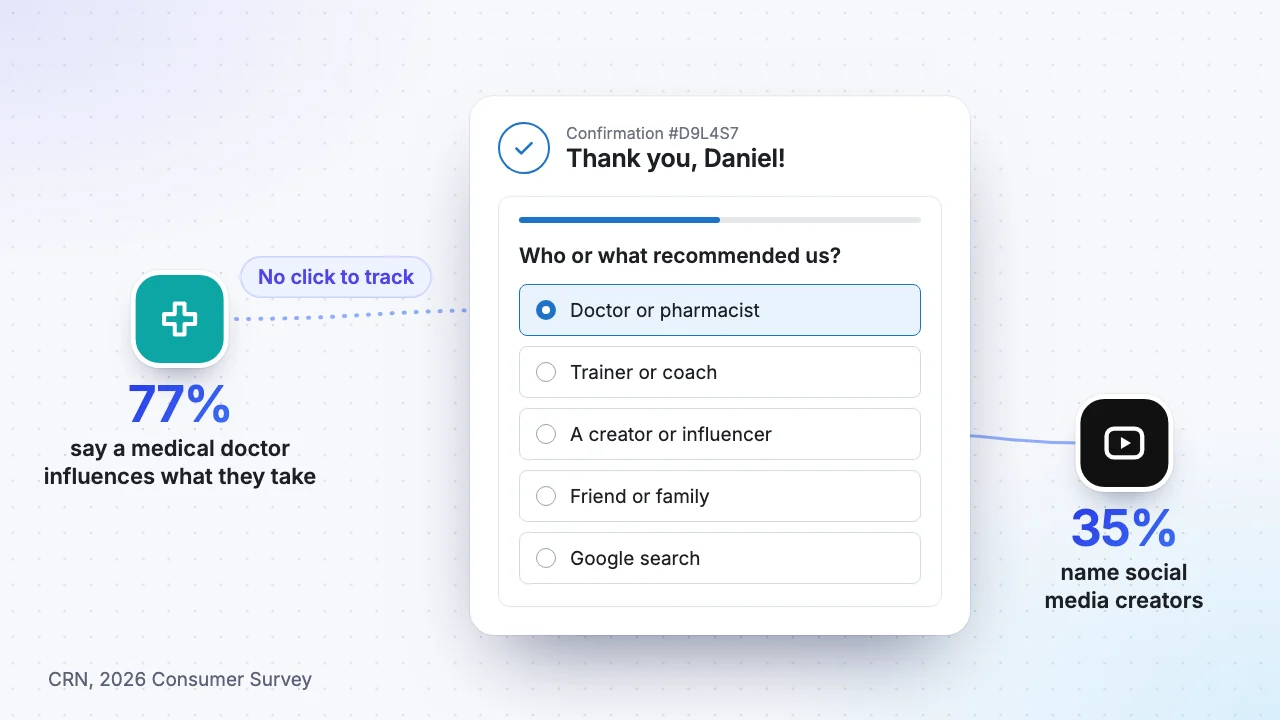
Buyers listen before they buy. In the same survey, 77% say a medical doctor influences what they take, 51% name supplement company materials, and 35% name social media creators. A doctor's advice leaves no click to track, so your reports never see it.
Price and loyalty pull in two directions. If prices rose 15%, 73% would look for savings, buy less or stop, while 9% would pay more without changing anything, the 2026 survey found.
Yet in CRN's 2024 survey, 71% of users said they are loyal to their brands and 69% said a personal regimen matters when they choose. Buyers stay when the product fits their goal.
What your reports miss
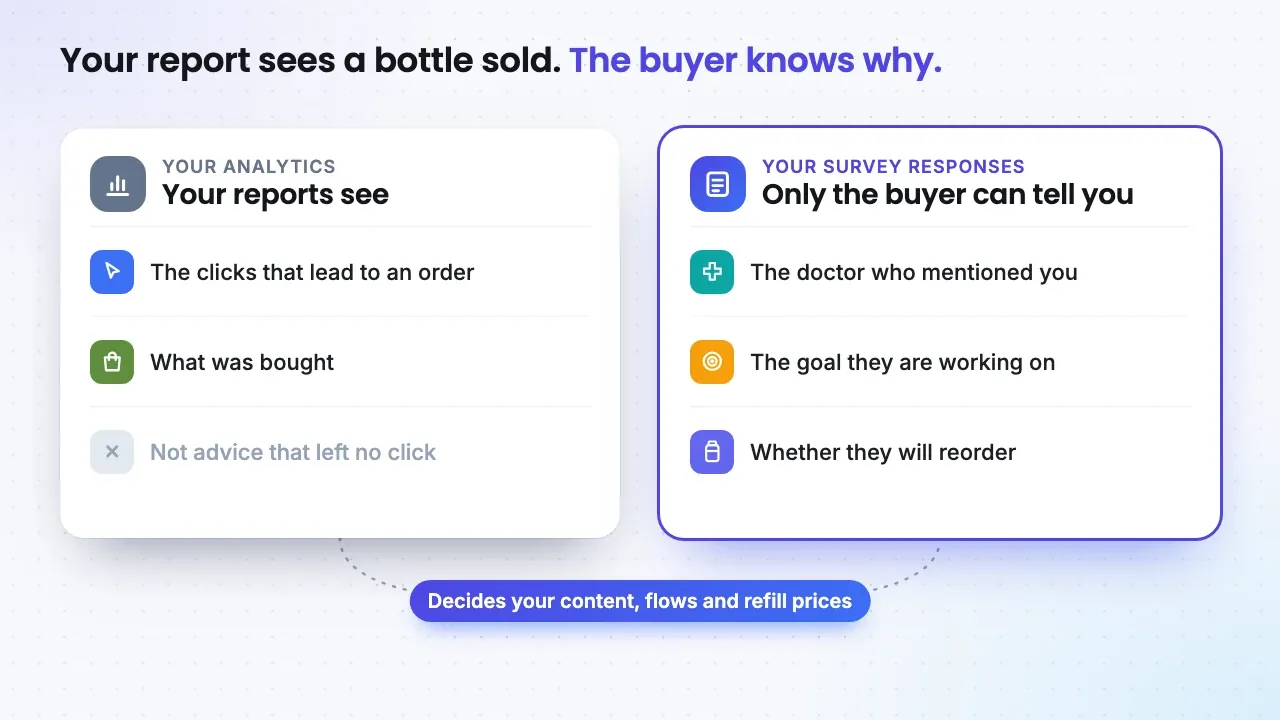
That fit is hard to see from your dashboard. Your analytics see the clicks behind an order and what was bought, not the doctor who mentioned you, the buyer's goal, or whether they will reorder when the bottle runs out.
Those answers decide which content you make, which flow each buyer gets and how you price refills. Only the buyer can give them, starting with who or what recommended you.
The questions to ask
Five questions bring those answers into view, starting with the advice.
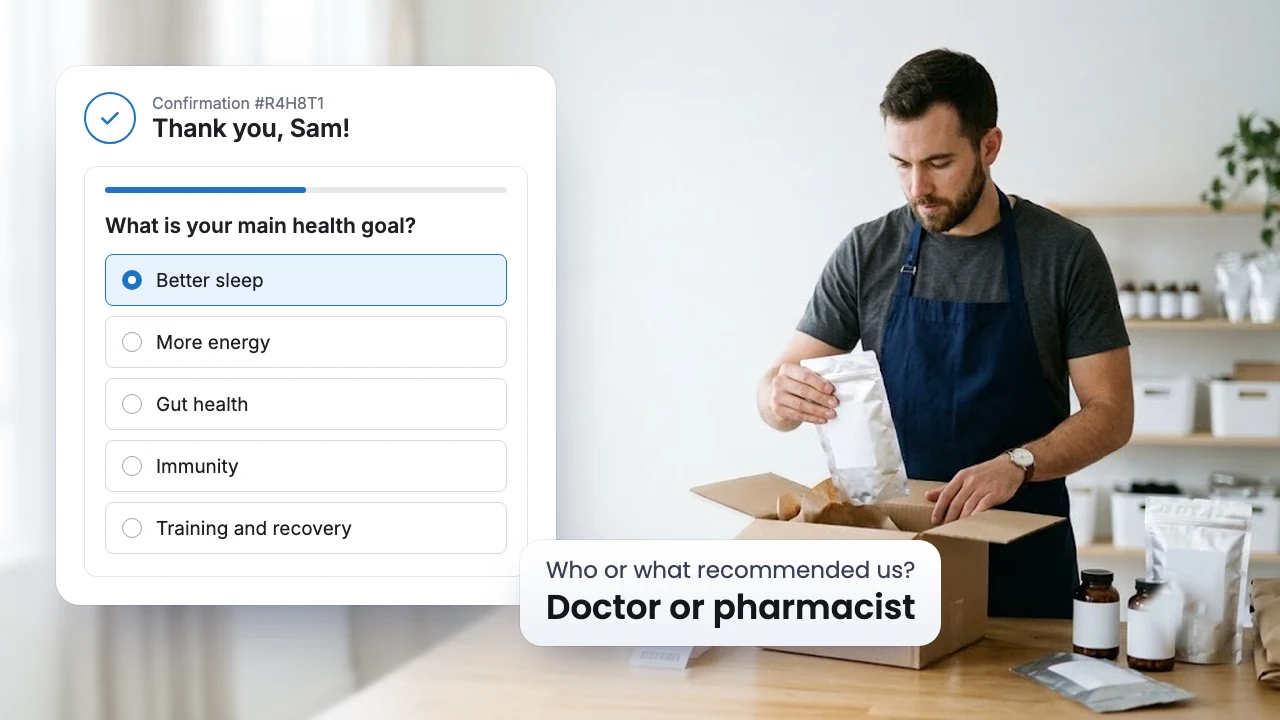
1. Who or what recommended us?
Advice is the main way into this category, and most of it happens offline. If many say doctor or pharmacist, put full ingredients, doses and testing details where a professional can check them in one look, and think about a referral program for practitioners.
2. What is your main health goal?
Buyers say a personal regimen matters, and the goal tells you what personal means for each one. If two goals lead, build one email flow per goal. On the Growth plan the answer lands on the buyer's Klaviyo profile, so a sleep buyer and a training buyer get different content and different next products.
3. Have you taken this kind of supplement before?
First timers need to learn how to take it, and switchers tell you which brands you win buyers from. If many switched, add a Short answer follow up on the Growth plan asking why, and use their words in your ads.
4. What would make you reorder?
Most buyers would hunt for savings after a price rise, and this shows whether your lever is price, convenience or results. If most pick a subscription or a reminder, offer subscribe and save, and time a refill email to land a few days before the bottle runs out.
5. After 30 days, how do you feel about the results?
Most supplements take weeks, so early reviews measure delivery, not results. If scores are low, read the written answers, which AI groups into topics. Often the issue is how or when people take it, and a short dosing email fixes that.
When to ask
Most of those questions fit the Thank you page, but the results question needs a full bottle. SEA Survey is a post purchase survey app, and its post purchase email waits until the order ships, then for the delay you set in days.
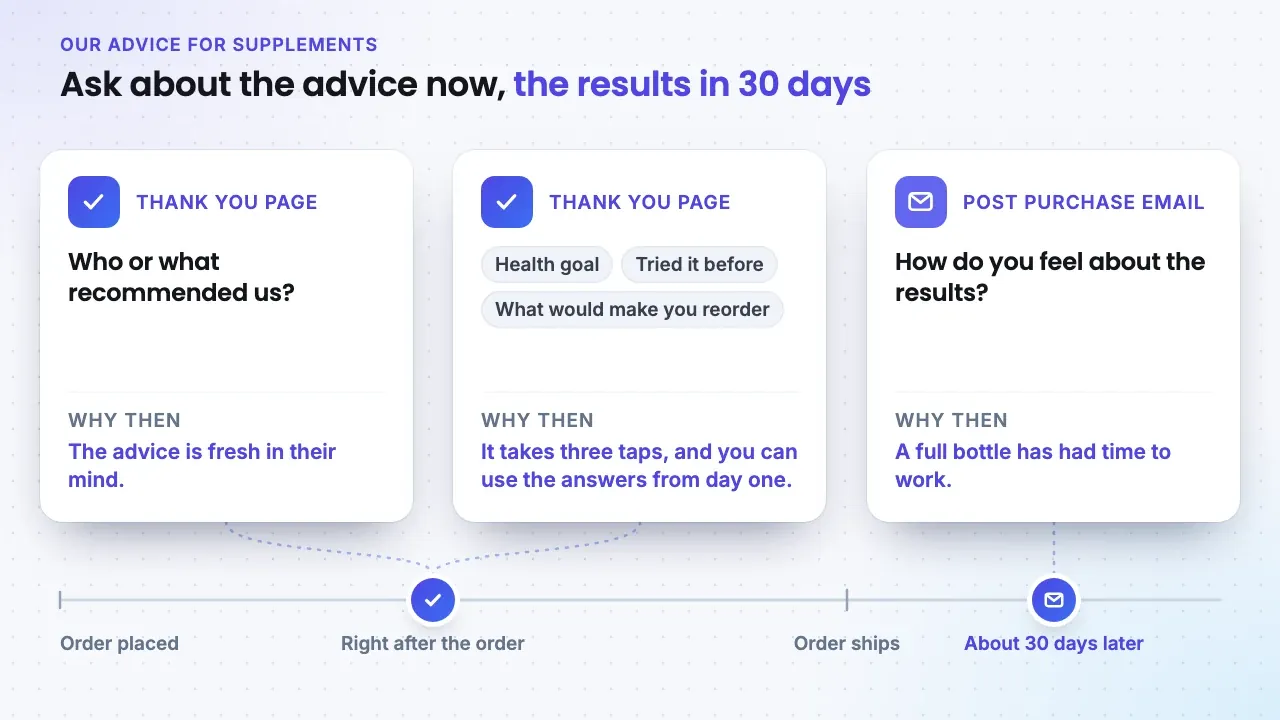
Who or what recommended you belongs on the Thank you page, while the advice is fresh in the buyer's mind. The health goal, whether they have taken it before and what would make them reorder go on the same page, because it takes three taps and you can use the answers from day one.
The results question goes in an email about 30 days after the order ships, when a full bottle has had time to work. These timings are our advice for supplements, not a measured rule.
Example: What a sleep supplement brand would do
Say you sell a magnesium blend for sleep and spend most of your budget on Meta. This example is made up to show the steps.
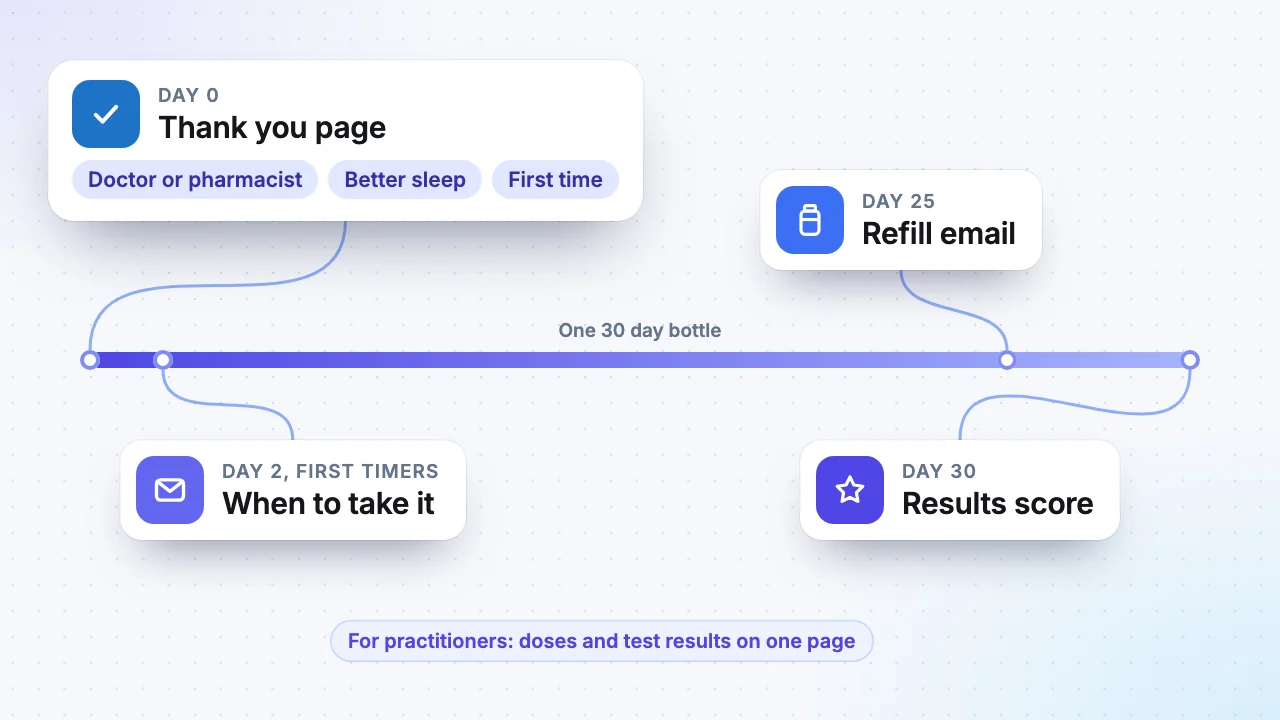
The Thank you page survey shows that a large group of buyers picks "Doctor or pharmacist", and most of them choose better sleep as their goal. Many first timers say they are not sure when to take it.
That points to three moves. Practitioners get a one page summary with doses and test results, and first timers get a short email on day two about when to take it. The refill email moves to day 25 of a 30 day bottle, and the 30 day score then shows whether the new email lifts how buyers feel about results.
Mistakes to avoid
A few choices in how you ask can cost you those answers.
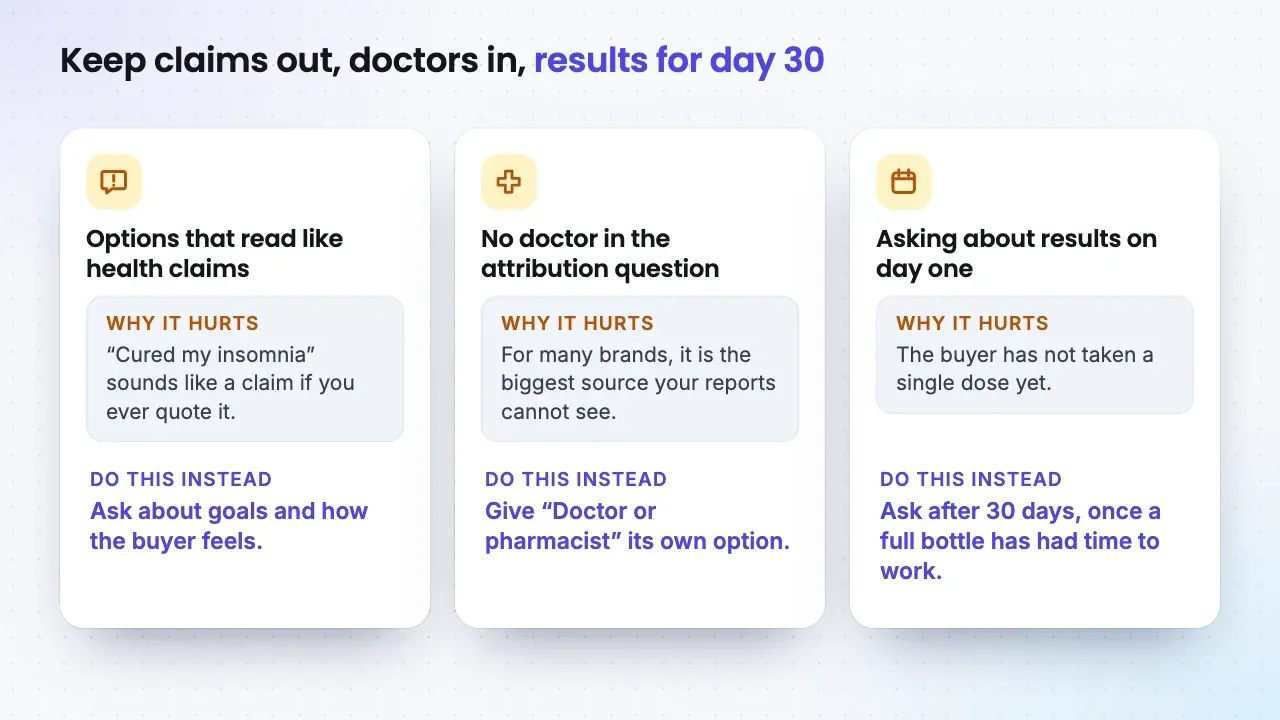
Answer options can read like health claims: "Cured my insomnia" sounds like a claim if you ever quote it. Ask about goals and how the buyer feels instead.
Leaving doctors out of the attribution question drops what is, for many brands, the biggest source your reports cannot see.
Asking about results on day one comes too early, because the buyer has not taken a single dose yet.
The Thank you page questions answer from the next order on, and the first results scores follow about 30 days after it ships. By then you know which goals lead and what would bring each buyer back.
FAQ
Is it fine to ask health questions?
Keep them to goals and habits, such as sleep, energy or training. A diagnosis or a medical condition is not needed to send better emails, so leave it out.
Does a survey slow down checkout?
No. The Thank you page shows after the order is placed, so the survey never stands between a buyer and paying.
Can I tag customers by their answer?
Yes. The Sea Survey Submitted trigger in Shopify Flow can tag customers or orders by answer, so a sleep buyer can enter a sleep flow in any tool that reads Shopify tags.