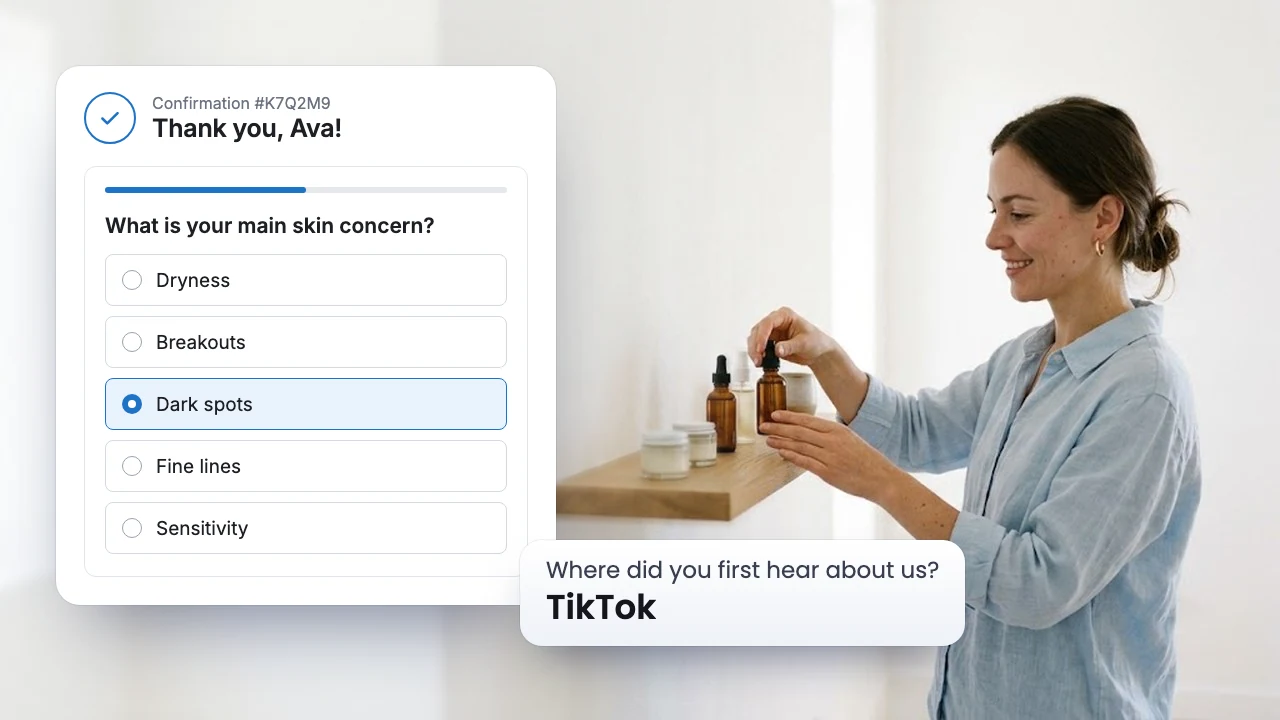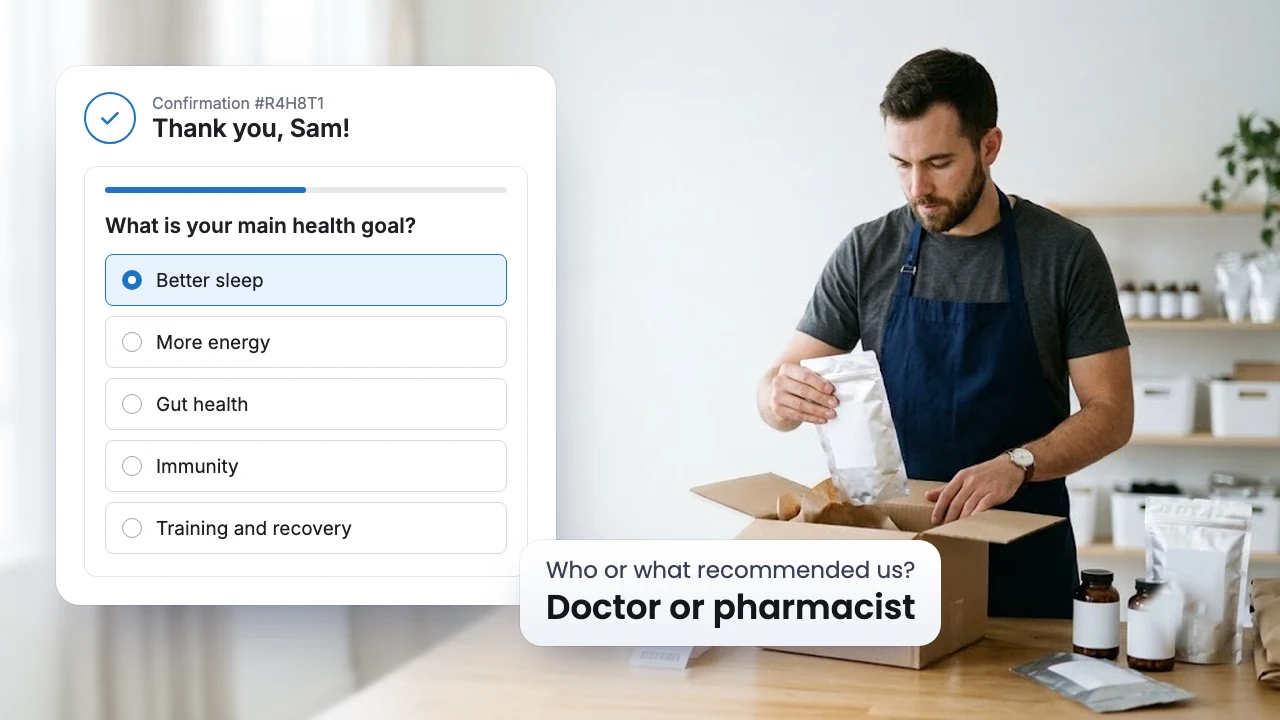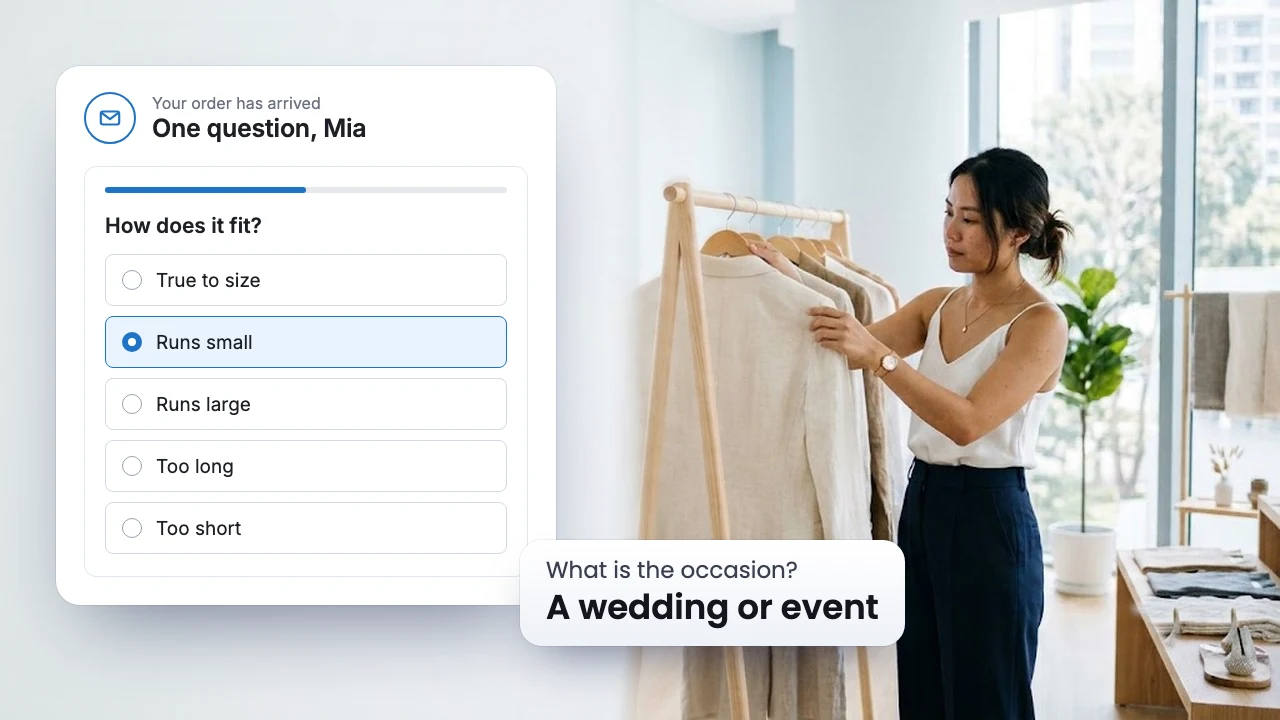
In short
- Ask who the piece is for and the occasion on the Thank you page, while the buyer has both in mind.
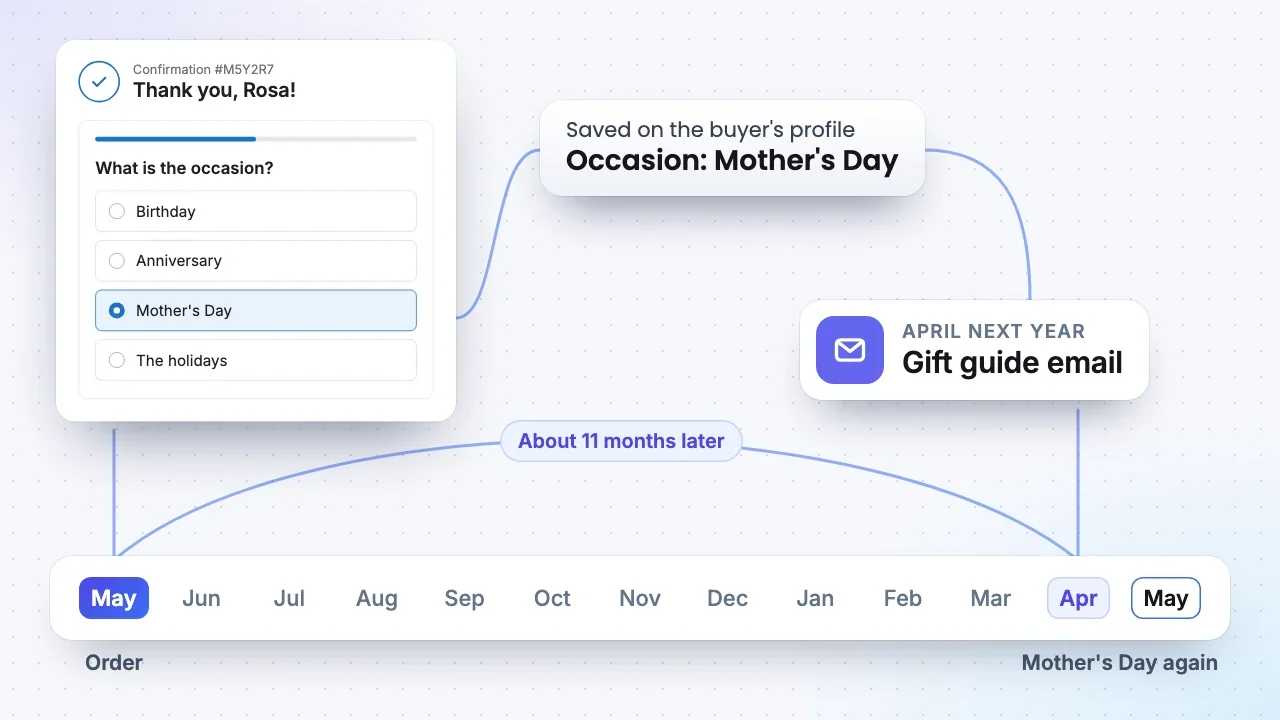
- Keep the occasion on the buyer's profile, so your reminder lands before the same date next year.
- Ask how the gift was received in an email after the day, not before it.
What makes jewelry different
On Valentine's Day and Mother's Day, shoppers spend more on jewelry than on anything else. NRF's Valentine's Day 2026 survey expects shoppers to spend $7 billion on jewelry, more than on an evening out or on flowers. Online is the top place to shop for those gifts, at 38%, the same survey found.
In NRF's Mother's Day 2026 survey, jewelry leads spending again, at $7.5 billion. An order in early May is often tied to a date that returns every year.
Gift ideas often start on a feed. In NRF's 2024 holiday survey, shoppers aged 18 to 24 were more likely to find gift ideas on TikTok (28%) and Instagram (27%). Of that group, 30% planned to give jewelry, more than any other age group.
Then there is trust. The buyer judges metal, stones and size from photos, often for someone else's finger.
What your reports miss
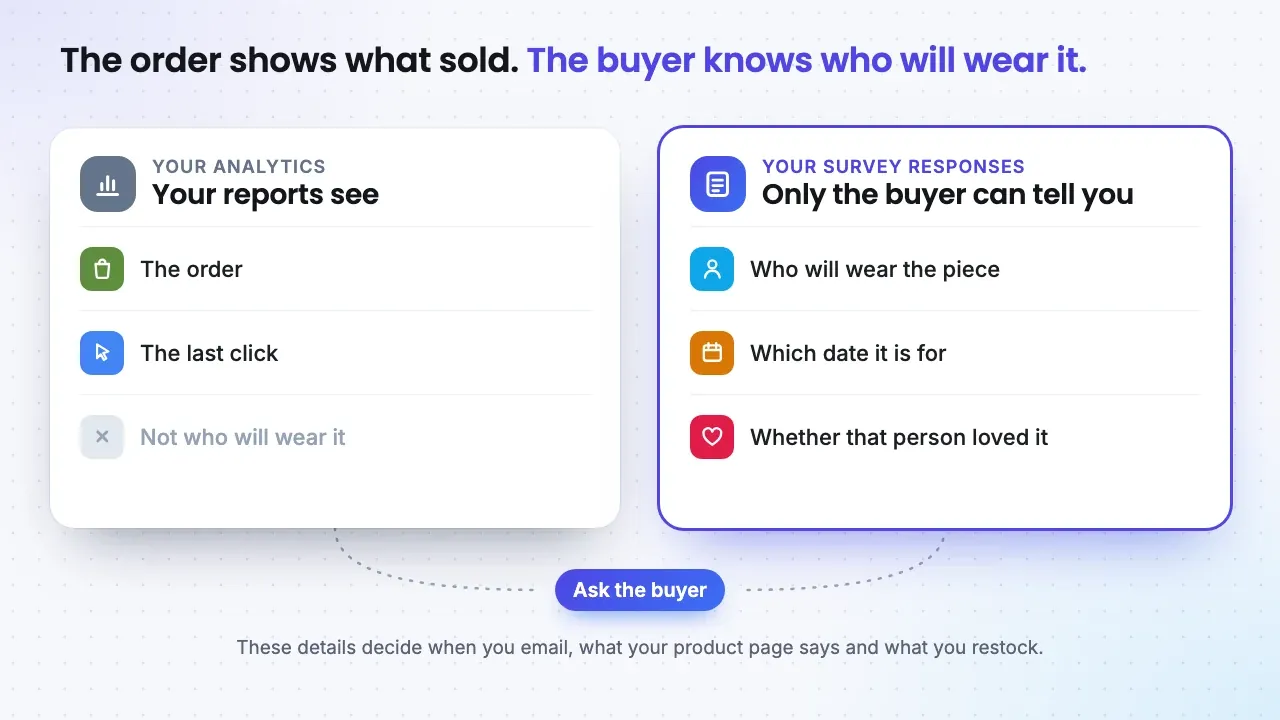
Little of this reaches your reports. Your analytics show the order and the last click, not who will wear the piece, which date it is for, or whether that person loved it.
Those details decide when you email, what your product page says and what you restock. Only the buyer can give them, from who the piece is for to where they first heard of you.
The questions to ask
Five questions cover those details. Four go on the Thank you page, and one goes in an email after the day.
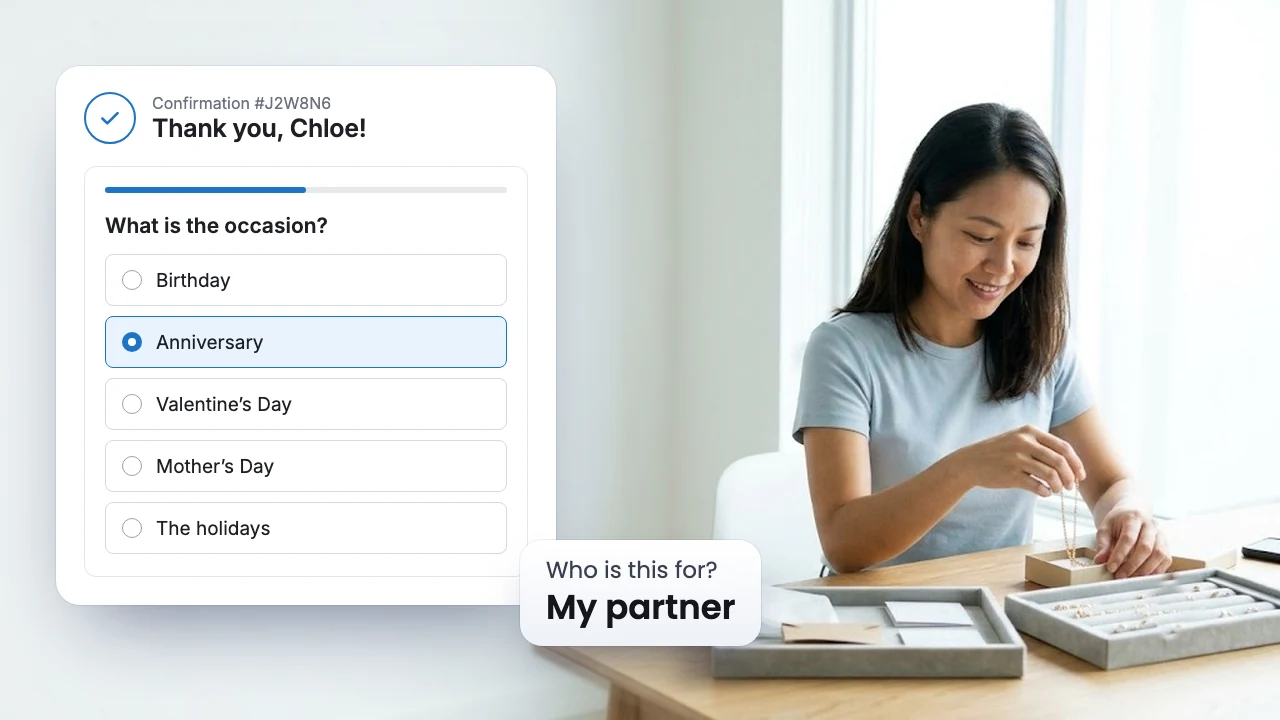
1. Who is this for?
The buyer and the wearer are often two people: A self buyer wants the next collection, and a gift buyer wants help before the next date. If gifts lead, use the Sea Survey Submitted trigger in Shopify Flow to tag gift buyers, and send them a gift guide before each big date instead of "complete your look" emails.
2. What is the occasion?
Most occasions come back every year, so this tells you when the buyer needs a gift again. If birthdays and anniversaries lead, the order date sits close to the real one, so a reminder about eleven months later arrives in time. On the Growth plan, branching shows a Short answer follow up only to those buyers, asking for the exact date.
3. Where did you first hear about us?
A piece received as a gift can bring the next order, yet that buyer shows up as Google search and the gift gets no credit. If "I got a piece as a gift" keeps coming up, your box is a channel: Put your store name and a care card in every gift box.
4. What almost stopped you from buying?
This question names the doubt your product page left open, from the people who bought anyway. If quality leads, put the metal, the stone and your care terms next to the price, with close up photos in daylight. A ring size guide answers size doubts, and the last order date for each occasion near the button answers delivery doubts.
5. How was your gift received?
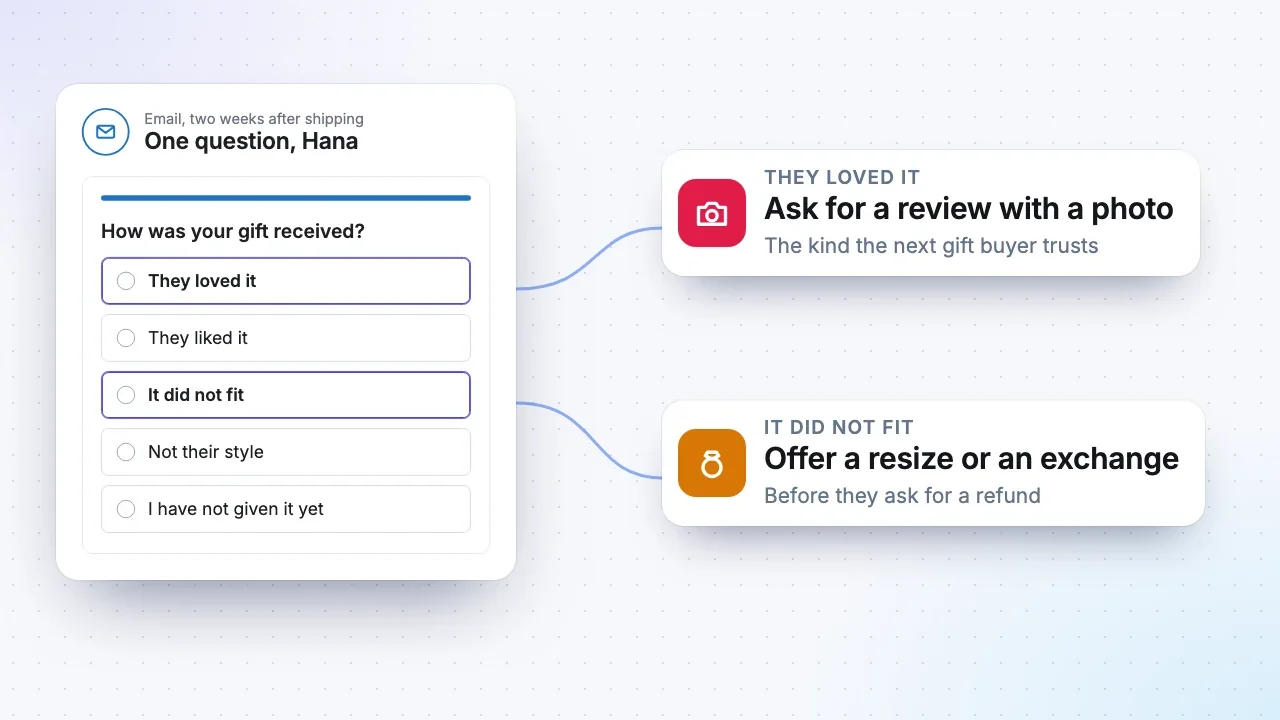
A gift is judged on the day it is opened, and the giver decides whether to buy from you again. If many say it did not fit, offer a resize or an exchange before they ask for a refund. Ask the buyers who loved it for a review with a photo, the kind the next gift buyer trusts.
When to ask
A gift is judged on the day it is opened, so the timing of each question matters. SEA Survey is a post purchase survey app, and its post purchase email waits until the order ships, then for the delay you set in days.
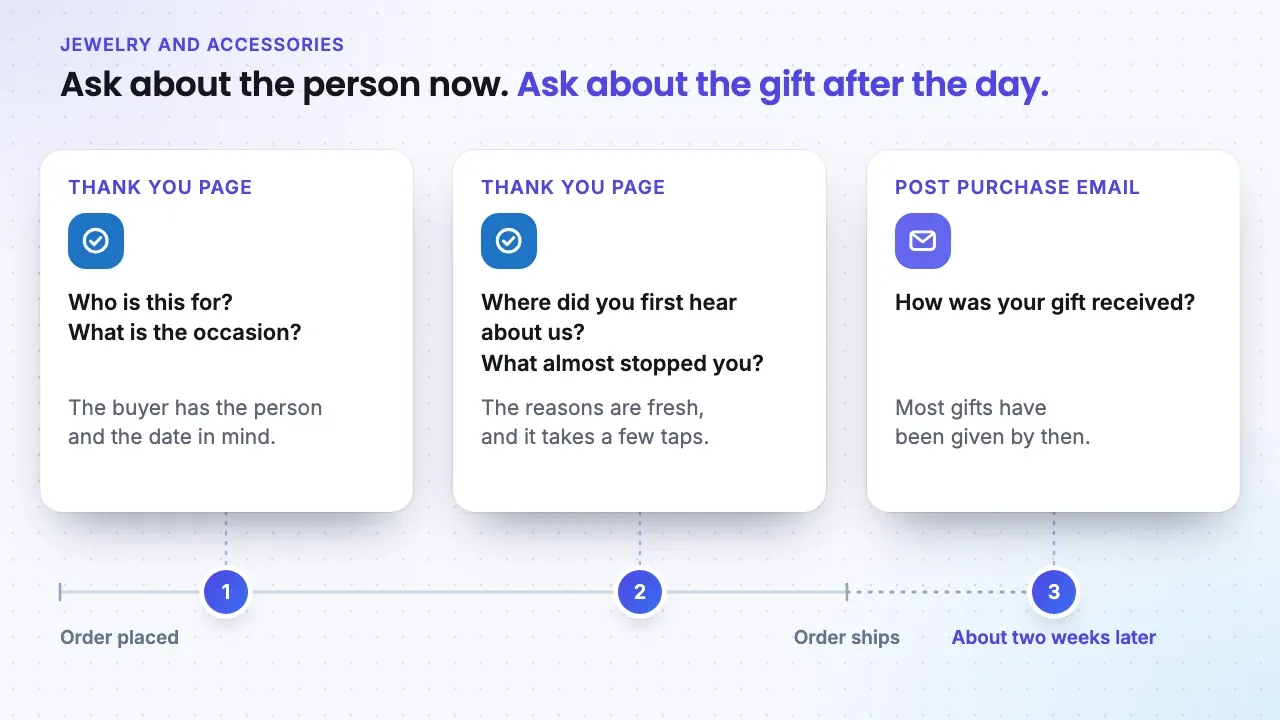
Who the piece is for and the occasion belong on the Thank you page, while the buyer has the person and the date in mind. Where they heard about you and what almost stopped them go on the same page, because the reasons are fresh and it takes a few taps.
"How was your gift received?" goes in an email about two weeks after the order ships, when most gifts have been given. These timings are our advice for jewelry, not a measured rule.
Example: What a gold jewelry brand would do
Say you sell gold plated name necklaces and birthstone rings. This example is made up to show the steps.
On the Thank you page, most buyers say the piece is a gift, and "My mother" leads. The occasions gather around Mother's Day and birthdays, and quality is the top doubt. In the email, most say the gift was loved, but a group of ring buyers picks "It did not fit".
That gives you three moves. Every necklace shows the plating and the care terms next to the price, and ring buyers get a size guide, with a free resize for the "It did not fit" group. The Mother's Day buyers get a tag and a gift guide in April next year, and the next batch of ring responses shows whether the guide worked.
Mistakes to avoid
Most mistakes here come from treating a gift like any other order.
Asking how they like it on the Thank you page comes too early, because the gift is still in the box.
Treating every buyer as the wearer sends a "complete your look" email to someone who bought for their mother, and it misses.
Leaving out "No occasion" makes self buyers pick the nearest holiday, and your reminder list fills with the wrong dates.
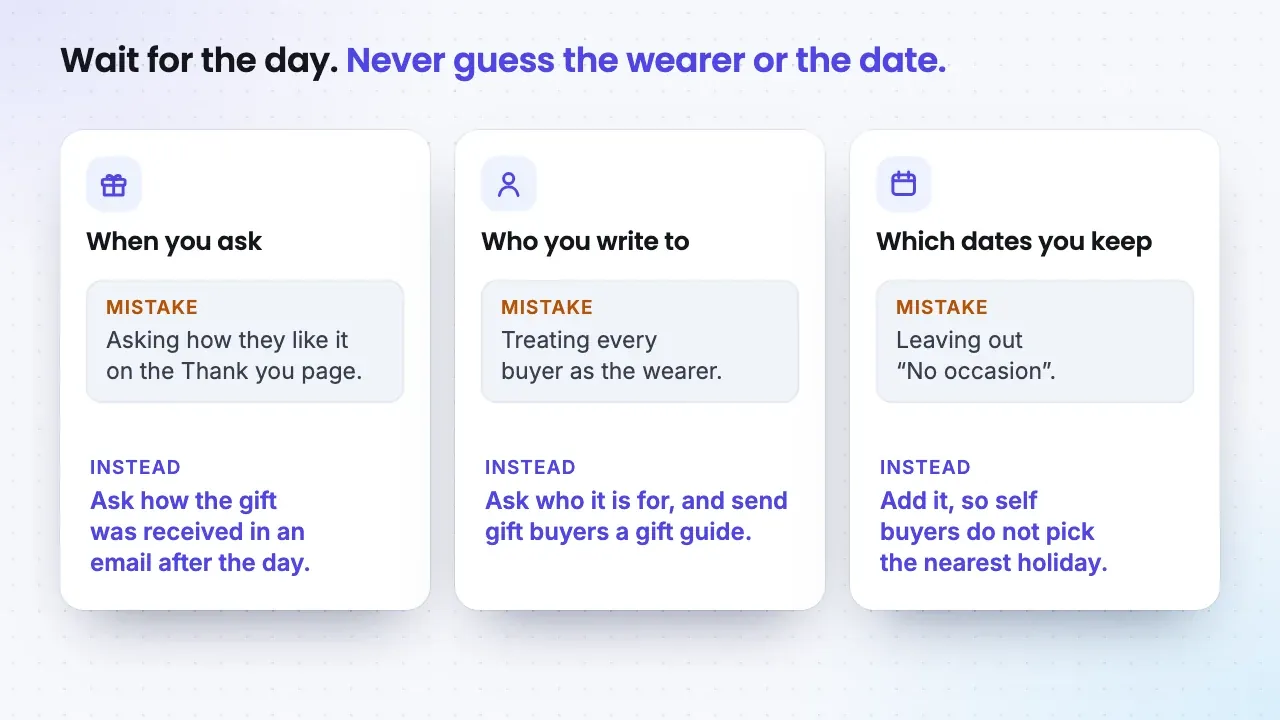
The Thank you page questions answer from the next order on, and the first gift responses follow about two weeks after it ships. Each occasion saved now becomes a reminder that lands before the same date next year.
FAQ
Can I remind gift buyers before the same date next year?
Yes, through your email tool: On the Growth plan each question becomes a property on the buyer's Klaviyo profile, so a segment of Mother's Day buyers can get a reminder in April. SEA Survey also connects to Mailchimp, Omnisend and ActiveCampaign.
Does a survey slow down checkout?
No. The Thank you page shows after the order is placed, so the survey never stands between a buyer and paying.
Can my team see the occasions without opening the app?
Yes. The Sea Survey Submitted trigger in Shopify Flow can add each response to a Google Sheet, so your team can plan stock around those dates.