In short
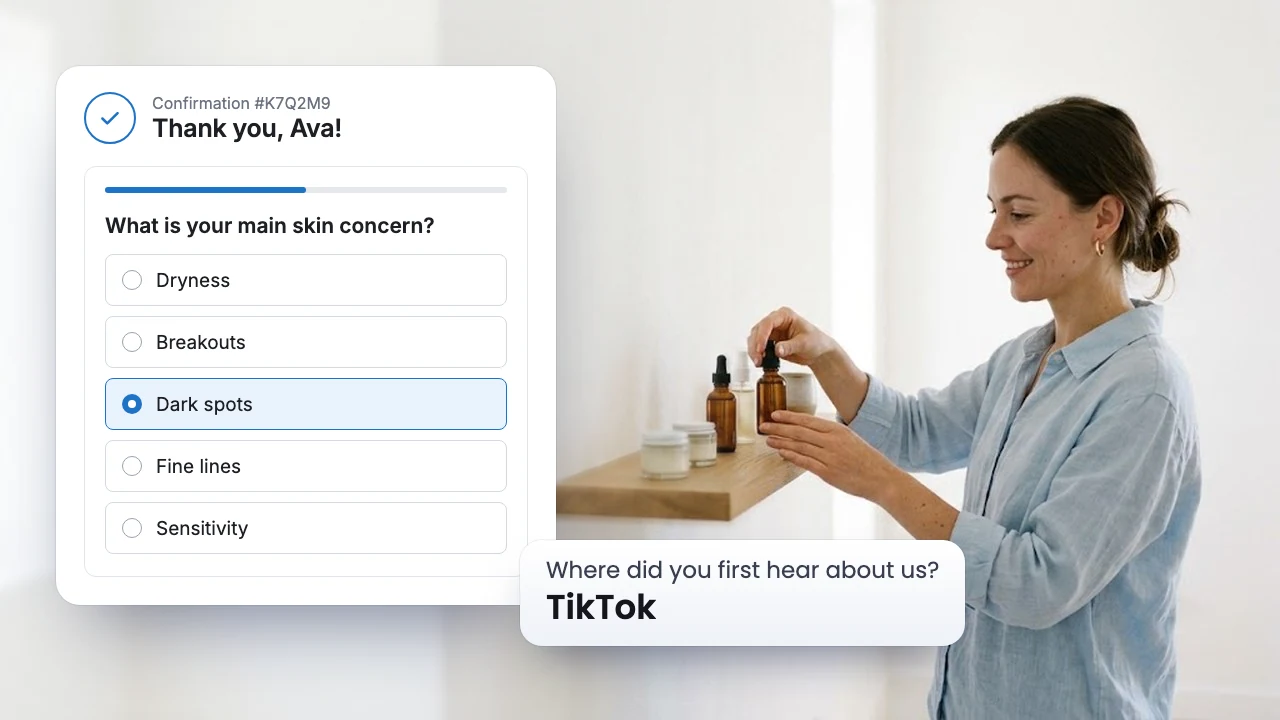
- Ask where buyers first heard of you on the Thank you page, with TikTok, Instagram and creators as separate options.
- Ask for the skin concern once, then send the answer to your email tool so every routine and refill email fits the buyer.
- Wait until the product has had time to work before you ask whether it worked.
What makes beauty different
More beauty is bought online than anywhere else. McKinsey's State of Beauty 2026 puts ecommerce at 28% of global beauty sales, ahead of grocery at 19% and specialty beauty stores at 18%.
Discovery happens on video. In the same report, TikTok is still about 2% of US beauty sales, yet it is the fastest growing beauty retailer, with sales up about 260% a year since 2023. A buyer who watched a creator's routine and then typed your brand into Google shows up in your reports as search, and the creator gets no credit.
Buyers also come back often. Klaviyo's 2024 State of Ecommerce report found that 85% of health and beauty shoppers are price sensitive and buy at least once a month. So the second order matters as much as the first, and the reason a buyer returns is worth knowing.
What your reports miss
Your analytics show the last click and what was in the cart. They cannot show which creator a buyer saw, which skin concern they want to fix, or whether the serum worked by week four. Those three answers decide what you post, what you email and what you restock, and only the buyer can give them. Here is how to ask the first question and read the answers.
The questions to ask
1. Where did you first hear about us?
- Why it matters: A creator video rarely leaves a click your pixel can follow. This is where TikTok and creators get their real share.
- If most say TikTok or a creator: On the Growth plan, branching shows a Short answer follow up only to those buyers, asking which creator. Put your budget behind the names that keep coming up.
2. What is your main skin concern?
- Why it matters: The same moisturizer is bought for different reasons, and each reason calls for a different next product.
- If one concern leads: Write the product page and your ads for that concern first. On the Growth plan the answer lands on the buyer's Klaviyo profile, so the dark spots routine email goes only to the dark spots group.
3. What almost stopped you from buying?
- Why it matters: It names the doubt your product page did not answer, from the people who bought anyway.
- If most say they were not sure it suits their skin: Add a skin type guide, or a product recommendation quiz before the cart. SEA Survey includes a quiz on every plan, Free included.
4. Is this for you or a gift?
- Why it matters: Gift buyers rarely reorder for themselves, so refill reminders miss them.
- If gifts rise in December: Use the Sea Survey Submitted trigger in Shopify Flow to tag those customers, and keep them out of the refill flow.
5. After four weeks, how has your skin changed?
- Why it matters: Early reviews come before results. This score comes after them.
- If one product scores low: Read the written answers first. AI groups them into topics, so you can see whether the problem is the formula or how people use it.
When to ask
In SEA Survey, the post purchase email waits until the order ships, then for the delay you set in days. Our advice for skincare:
| Moment | Question | Why then |
|---|---|---|
| Thank you page | Where did you first hear about us? | The buyer still remembers the video or the friend |
| Thank you page | Skin concern, what almost stopped you, gift | The reasons are fresh, and it takes three taps |
| Email about 4 weeks after the order ships | How has your skin changed? | Most routines need weeks before results show |
Example: what a serum brand would do
This example is made up to show the steps. Your own responses decide.
Say you sell a vitamin C serum and run ads on Meta and TikTok. Your reports give most sales to Google search and Meta. The Thank you page survey tells a different story: a large group of buyers picks TikTok, and the written follow ups keep naming the same two creators. Most of those buyers also pick dark spots as their concern.
That gives you three moves before the next sale. Brief those two creators on a dark spots routine. Lead the product page with dark spots. Send the dark spots group a routine email that pairs the serum with sunscreen. Four weeks later, the change score tells you whether the routine delivers, before you spend more on it.
Mistakes to avoid
- One "Social media" option. It hides the split between TikTok, Instagram and YouTube, which is the split you need most.
- Asking "Did it work?" on the Thank you page. The buyer has not opened the box yet.
- Too many questions at once. Keep the Thank you page to three or four taps, and save the results question for the email.
FAQ
How many questions should a beauty store ask?
Three or four on the Thank you page, and one in an email after the product has had time to work. Each extra question means fewer buyers finish.
Does a survey slow down checkout?
No. The Thank you page shows after the order is placed, so the survey never stands between a buyer and paying.
Can the responses go to Klaviyo?
Yes, on the Growth plan. Each question becomes a property on the buyer's Klaviyo profile, so you can build segments from it. SEA Survey also connects to Mailchimp, Omnisend and ActiveCampaign.
Sources: McKinsey, State of Beauty, June 2026. Klaviyo, 2024 State of Ecommerce, health and beauty. Timing in this post is our advice, not a measured rule.