In short
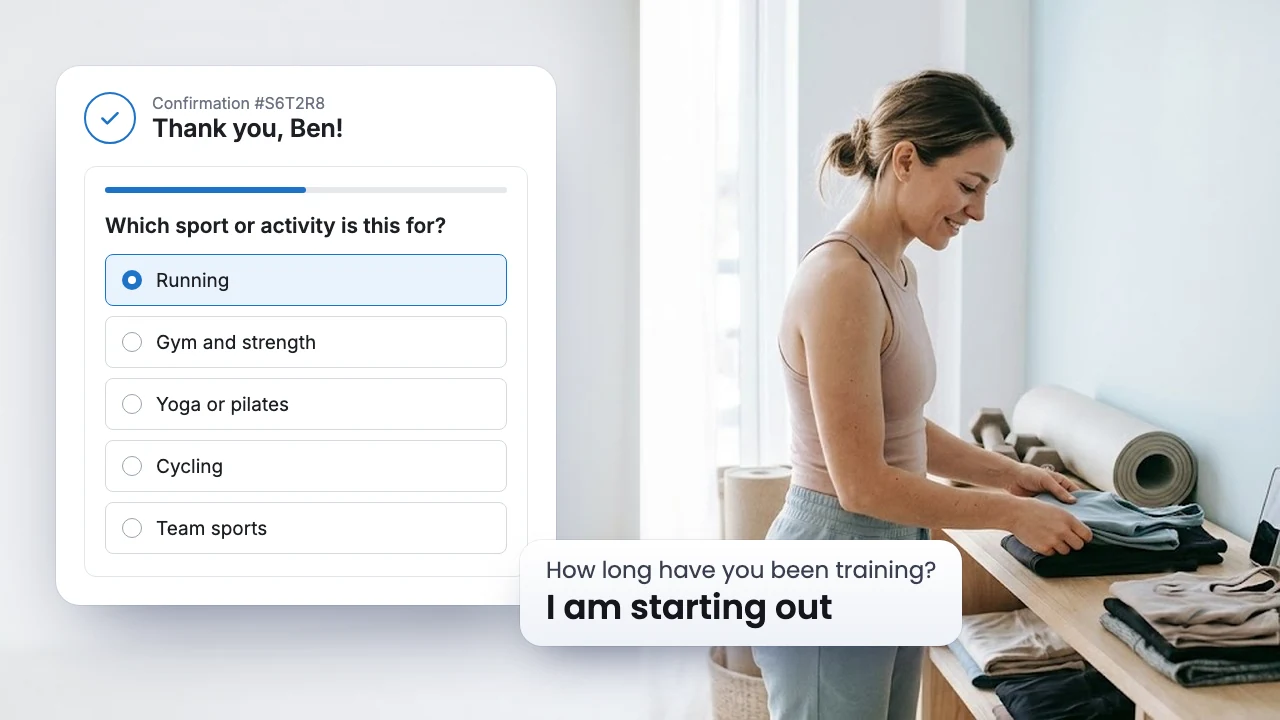
- Ask which sport the gear is for. The same shorts can go to the gym, the trail or the court.
- Ask how long buyers have been training, because a beginner in January needs different emails than a regular.
- Check in after a few weeks of use, when fit and wear finally show.
What makes sports and fitness different
The SFIA 2026 Topline Participation Report counts a record 250 million Americans who took part in at least one sport, fitness or leisure activity in 2025, across 126 activities. Pickleball is the fastest growing sport for the fifth year in a row.
No single channel leads discovery. In Radial's survey of sporting goods shoppers from late 2024, online search (35%), social media (34%), experiences in a store (33%) and friends or family (31%) all rank as top influences. A buyer who tried shoes on in a store shows up in your reports as direct traffic.
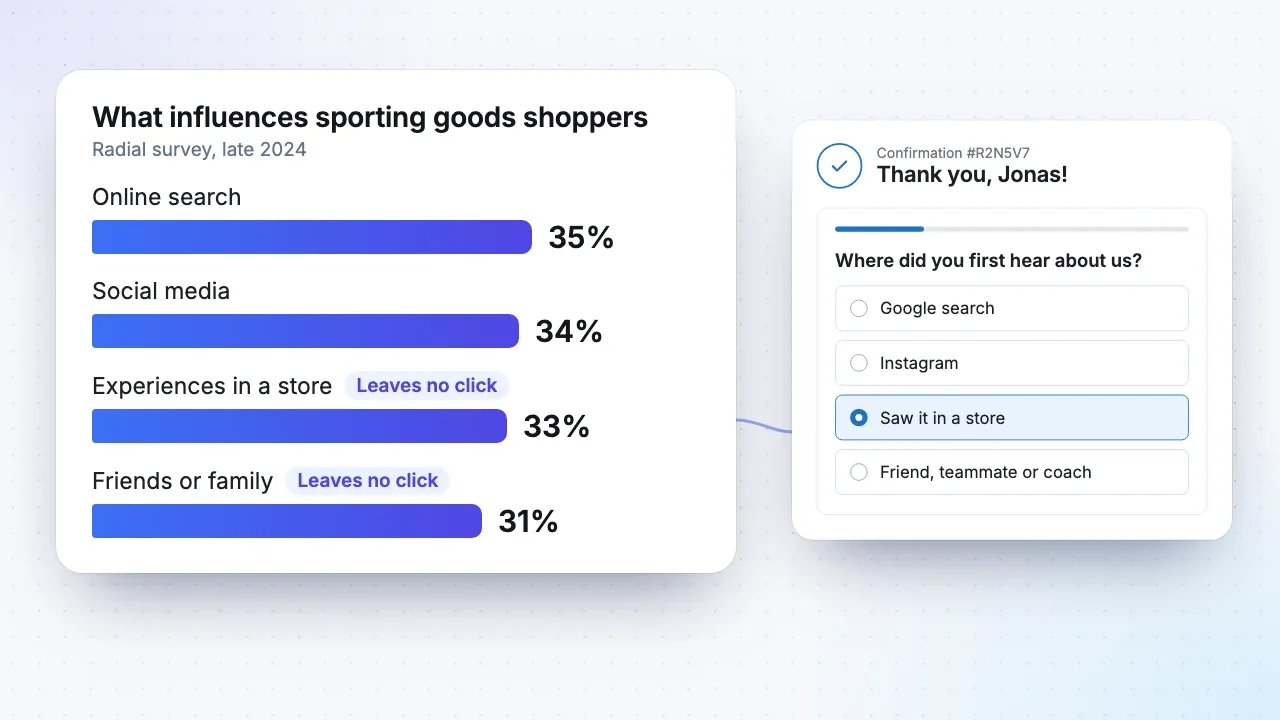
Timing follows the training calendar. In the same survey, 27% of shoppers buy around the holidays or as needed, 24% around deals, and 21% when they start a new routine. Younger buyers lean toward New Year's resolutions and the start of a season, so a January order often comes from someone starting out.
What your reports miss
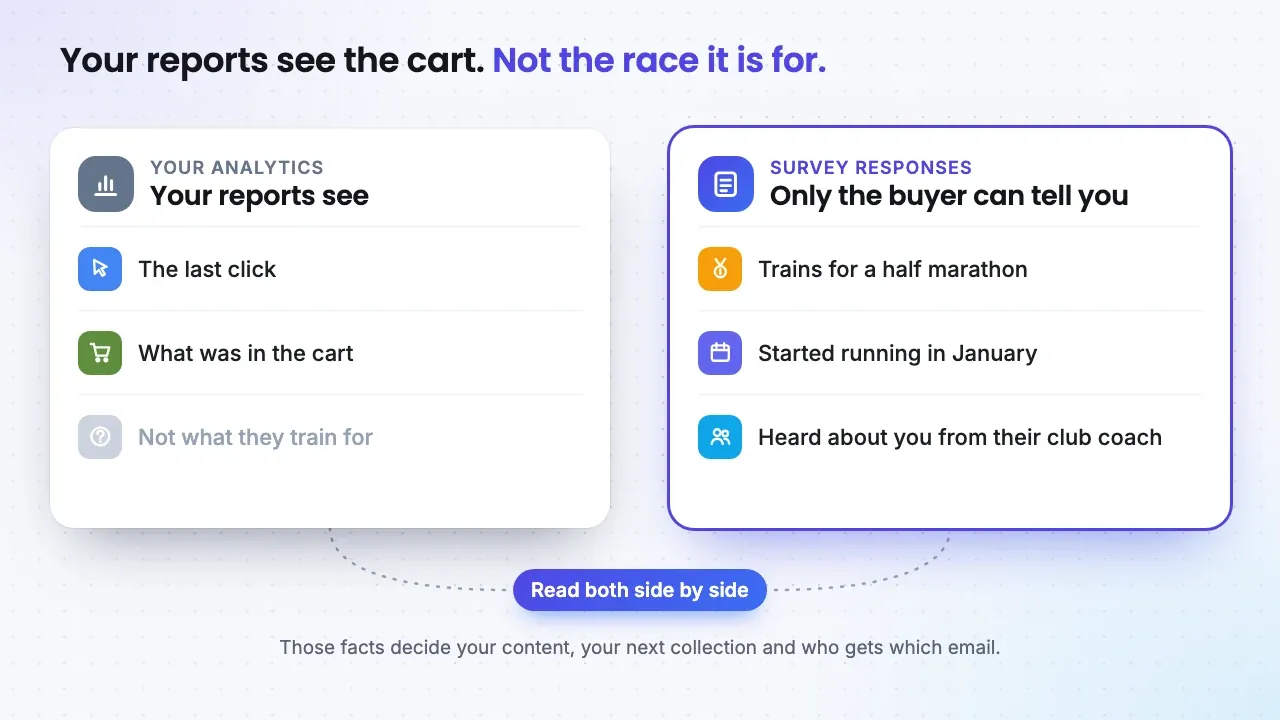
Your reports cannot tell that January beginner from a regular. Your analytics show the last click and what was in the cart, not that the buyer trains for a half marathon, started running in January, or heard about you from their club coach.
Those facts decide your content, your next collection and who gets which email. Only the buyer can give them, starting with where they first heard of you.
The questions to ask
Five questions fill that gap, four on the Thank you page and one in an email after a few weeks of use.
1. Where did you first hear about us?
Stores, teammates and coaches start many gear purchases, and none of them leave a click. If many name a teammate or coach, branching on the Growth plan shows a Short answer follow up only to those buyers, asking which club or team. The clubs that keep coming up are your first partners.
2. Which sport or activity is this for?
The order shows what was bought, not what for: A runner and a yoga buyer of the same leggings want different next products. If one sport leads, lead your ads and product pages with it. A sport you do not stock that keeps showing up under Other (write in) may be your next collection.
3. Who will use it?
The buyer is not always the athlete, since children outgrow gear every season and teams order in bulk. If children or gifts show up often, send parents a reminder before the next season, when the next size is due. Tag gift buyers with the Sea Survey Submitted trigger in Shopify Flow, and keep them out of training emails.
4. How long have you been training?
About one in five shoppers buys when a new routine starts, Radial found, and beginners need help with use and care while regulars want the next upgrade. If beginners rise in January, the Growth plan puts the response on the buyer's Klaviyo profile, so beginners get a starter series and regulars new releases. Branching can show this question only to buyers who picked Me.
5. After a few weeks of use, how is it holding up?
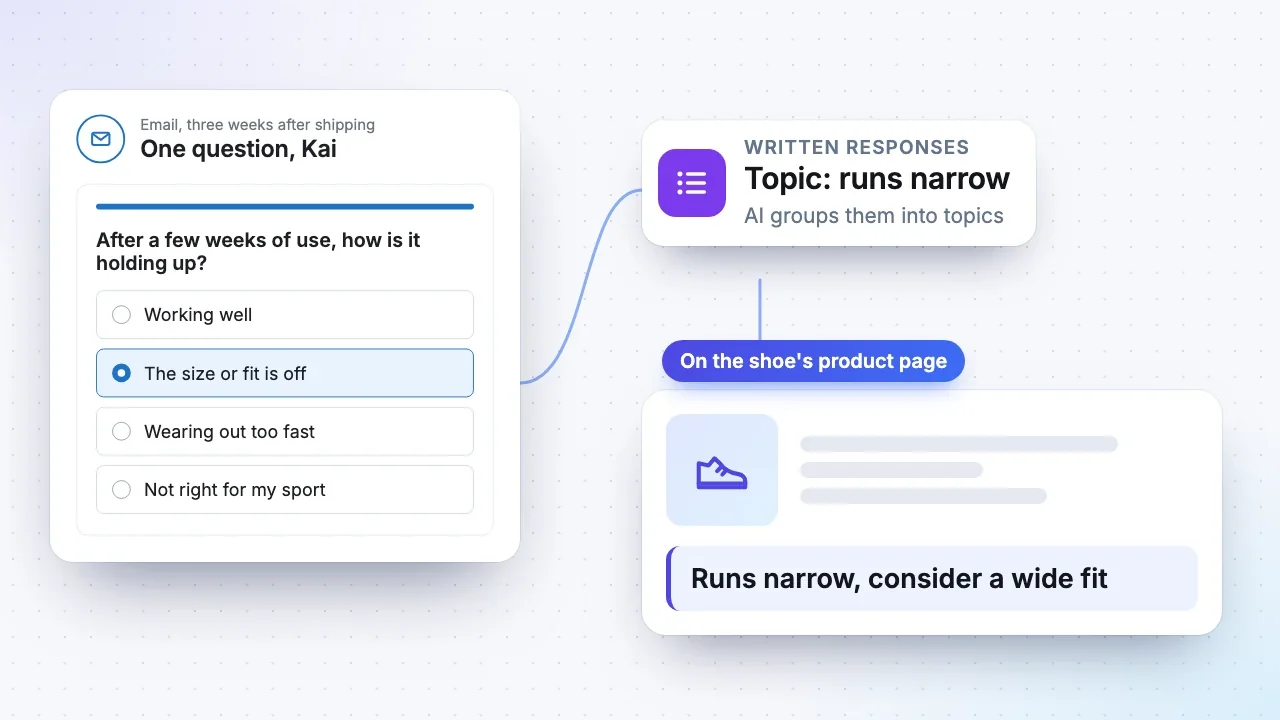
A review on delivery day cannot judge grip, fit on a long run or how the seams hold up. If one product gets many complaints, read the written responses, which AI groups into topics, to find the cause. Shopify Flow can also add each response to a Google Sheet, so your team can offer an exchange first.
When to ask
Each of those questions works best at one moment. SEA Survey is a post purchase survey app, and its post purchase email waits until the order ships, then for the delay you set in days.
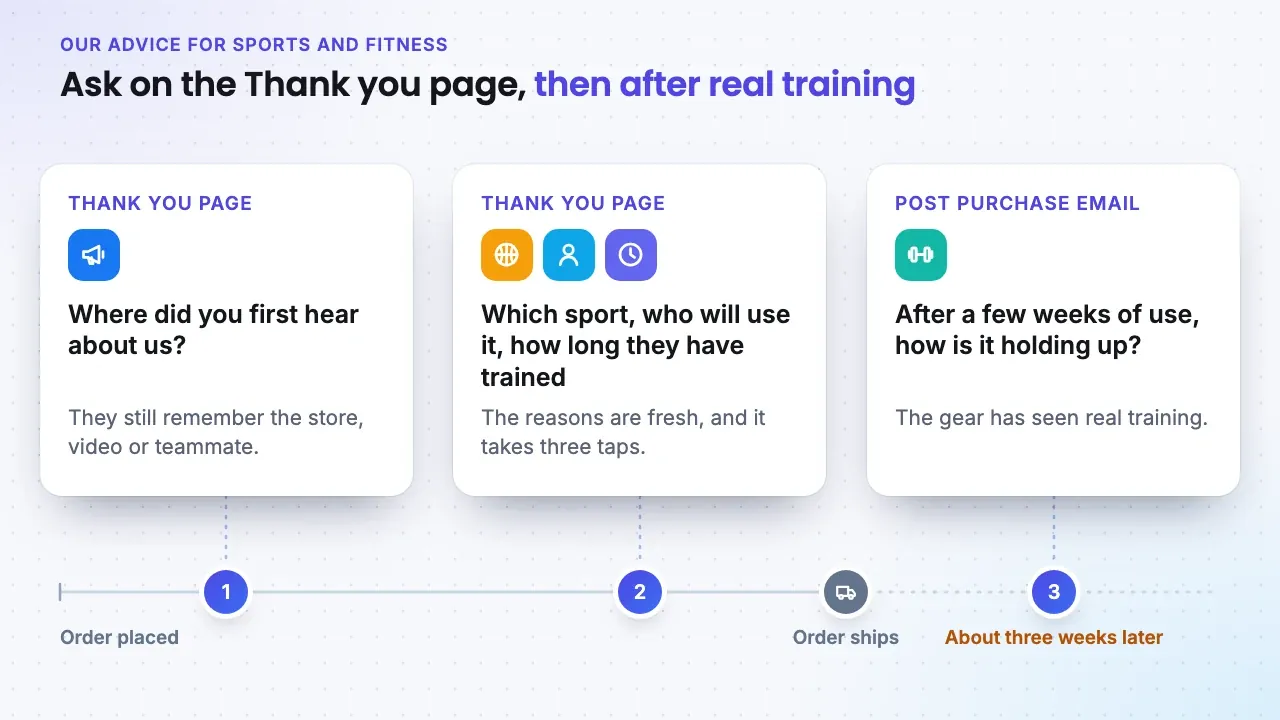
Where they first heard about you belongs on the Thank you page, while they still remember the store, video or teammate. Which sport, who will use it and how long they have trained go on the same page, because the reasons are fresh and it takes three taps.
The check in email goes out about three weeks after the order ships, once the gear has seen real training. These timings are our advice for sports and fitness, not a measured rule.
Example: What a running brand would do
Say you sell running shoes and apparel, and your reports give most January sales to Google and Meta. This example is made up to show the steps.
In the survey, a large group picks Running and "I am starting out", and the follow ups keep naming the same two run clubs. Three weeks later, one shoe model gets many "The size or fit is off" responses, and the written ones say it runs narrow.
That gives you three moves. Beginners get a starter series on shoe care and a first 5K plan, and the two run clubs get a member discount. That shoe's page adds "runs narrow, consider a wide fit", and the next round of responses shows whether the fit note worked.
Mistakes to avoid
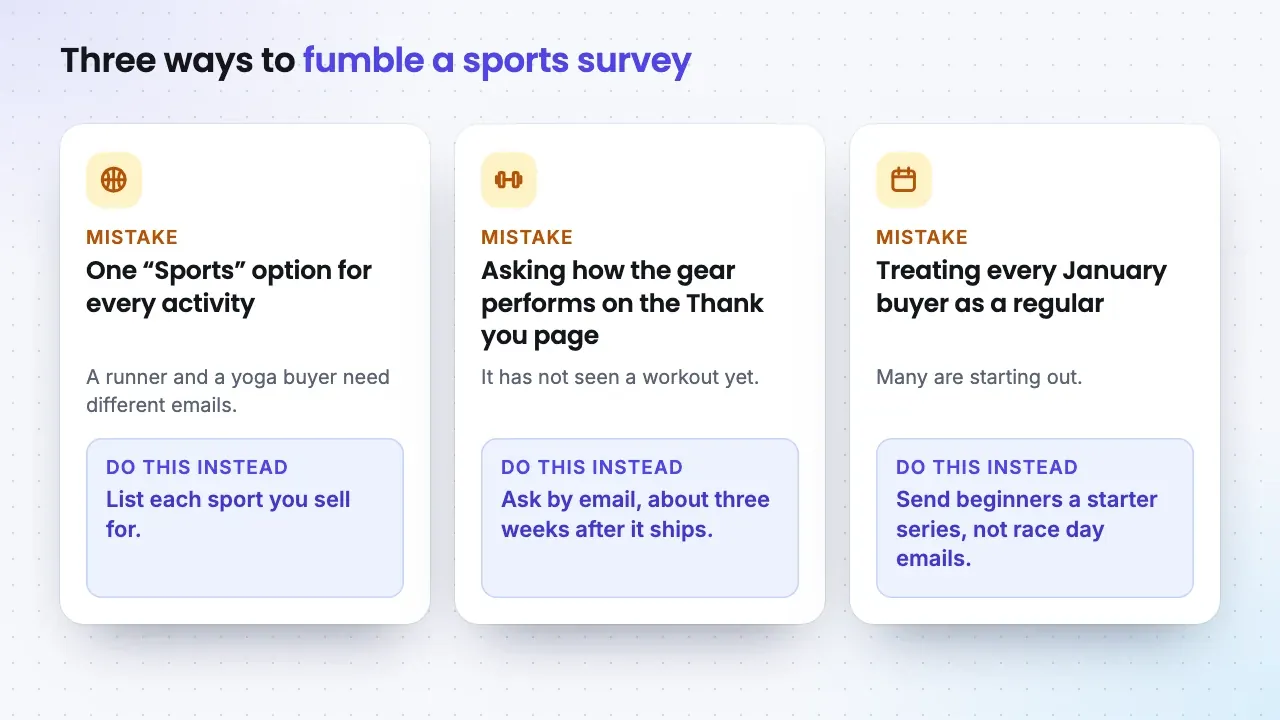
Sports responses pay off when the options match the sport and the question matches the moment. These three mistakes miss one or the other.
One "Sports" option for every activity lumps together a runner and a yoga buyer, who need different emails, so list each sport you sell for.
Asking how the gear performs on the Thank you page comes too early, because it has not seen a workout yet.
Treating every January buyer as a regular misses that many are starting out, and race day emails mean little to them.
The Thank you page questions answer from the next order on, and the first check ins follow about three weeks after it ships. Added before January, the training question also shows which buyers are starting out and which are regulars.
FAQ
How many questions should a sports store ask?
Three or four on the Thank you page, and one in an email after a few weeks of use. Each extra question means fewer buyers finish.
Does a survey slow down checkout?
No. The Thank you page shows after the order is placed, so the survey never stands between a buyer and paying.
Can I send the check in only for some products?
Yes. A customer segment can target a product or a product category, so the check in email goes to shoe and apparel buyers and skips bottles and gift cards.