In short
- Ask which pet the order is for, with age in the options, and send the response to your email tool.
- Give vets, breeders and shelters their own options, because their advice leaves no click.
- Ask how long the order will last, and check in on the pet before the bag runs out.
What makes pet supplies different
The American Pet Products Association's 2026 State of the Industry report counts 95 million US households with a pet in 2025, with dogs in 53% of US households and cats in 39%. Every order is for an animal you never see, and a puppy and a senior cat need different products.
In a 2026 Talker Research survey of 2,000 pet owners for Darwin's pet food, 71% say veterinarians remain their most trusted source for health and nutrition advice. In the same survey, 43% have used AI tools like ChatGPT for pet health or nutrition information. A vet's advice leaves no click, and a buyer who asked an AI tool may reach you later through search.
Pet supplies get used up, so the next order matters. In Chewy's second quarter 2026 results, sales to Autoship customers made up 84.6% of net sales. A refill email that lands late may reach a buyer who already ordered elsewhere.
What your reports miss
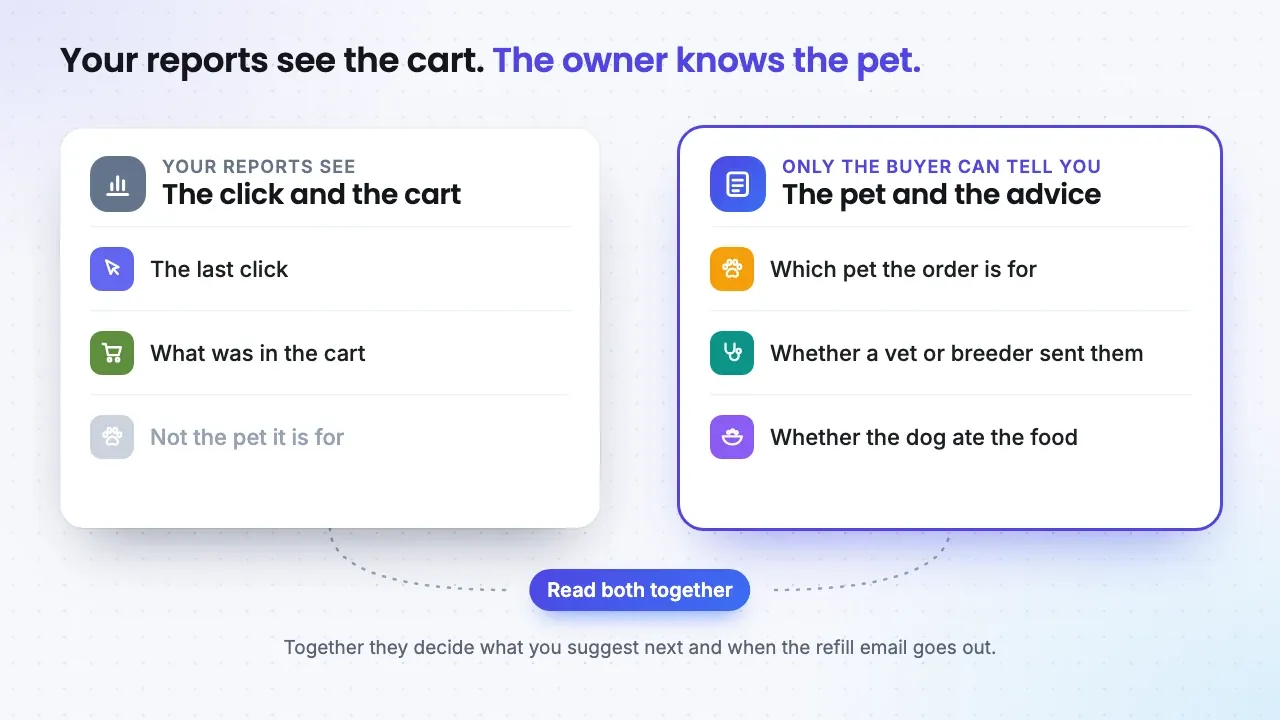
The pet, the advice and the refill rhythm all happen away from your store. Your analytics show the last click and what was in the cart, not which pet the order is for, whether a vet or breeder sent the buyer, or whether the dog ate the food.
Those facts decide what you suggest next and when the refill email goes out. Only the buyer can give them, starting with who or what recommended you.
The questions to ask
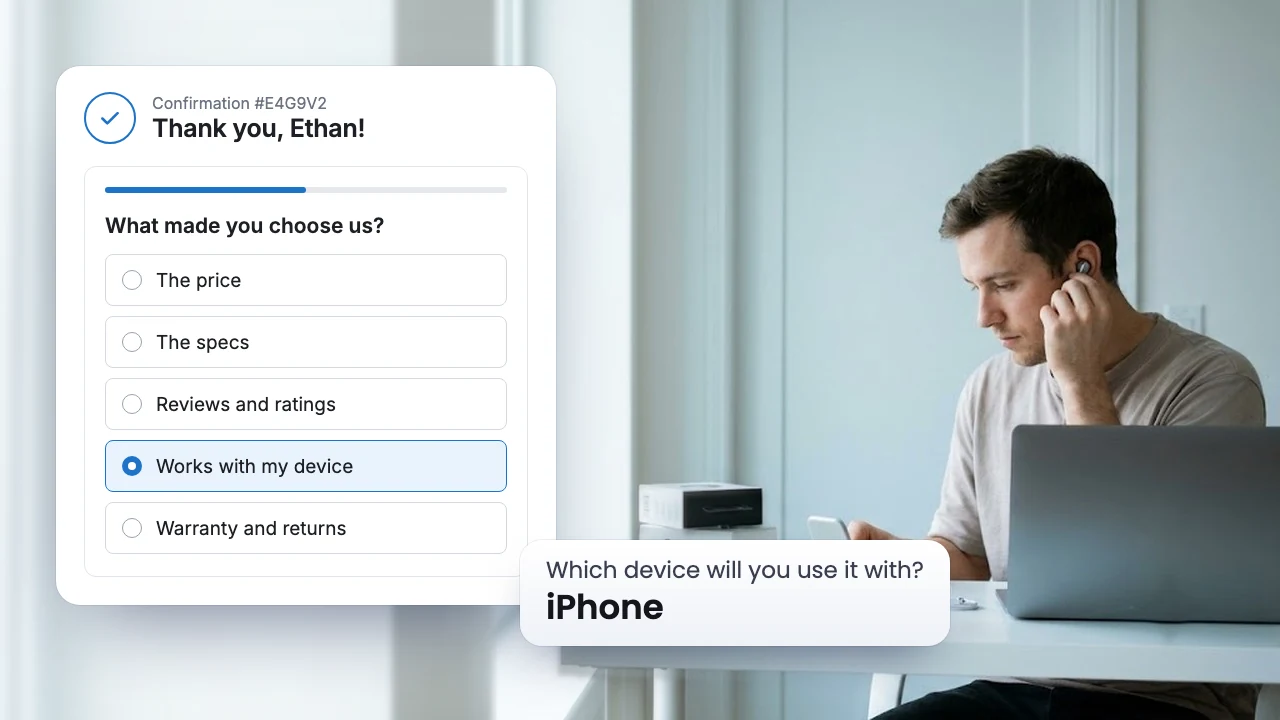
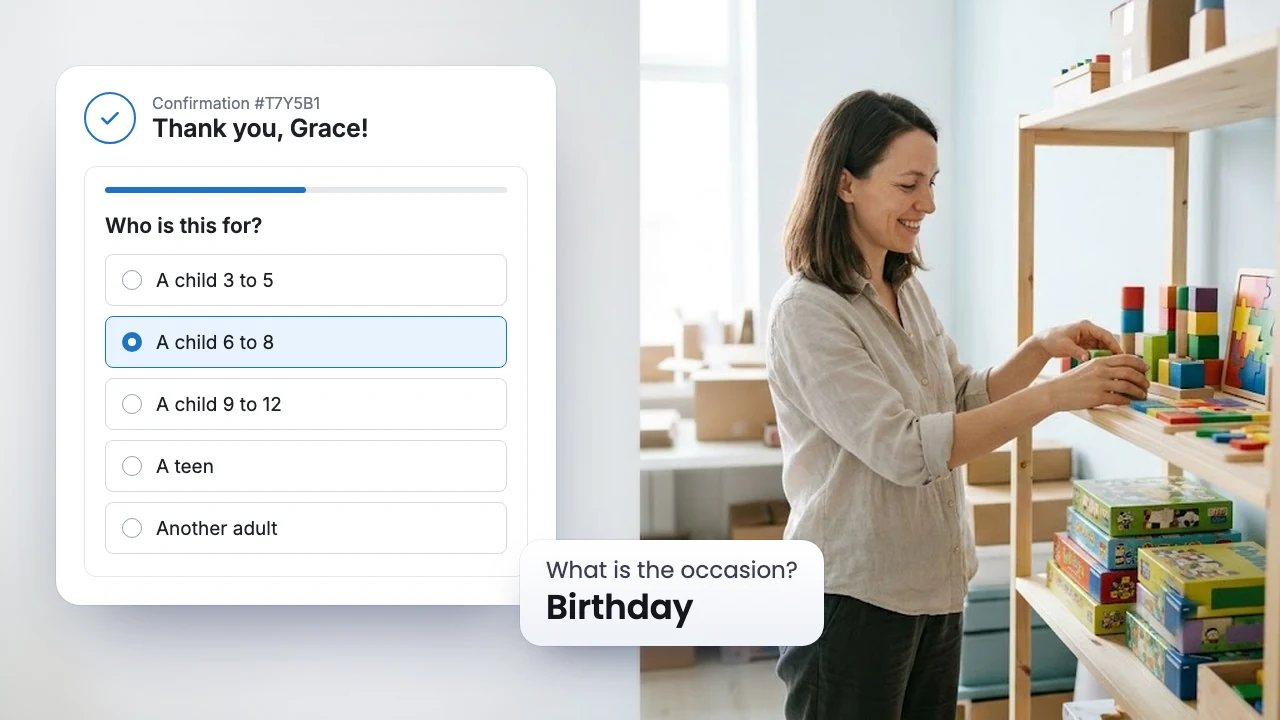
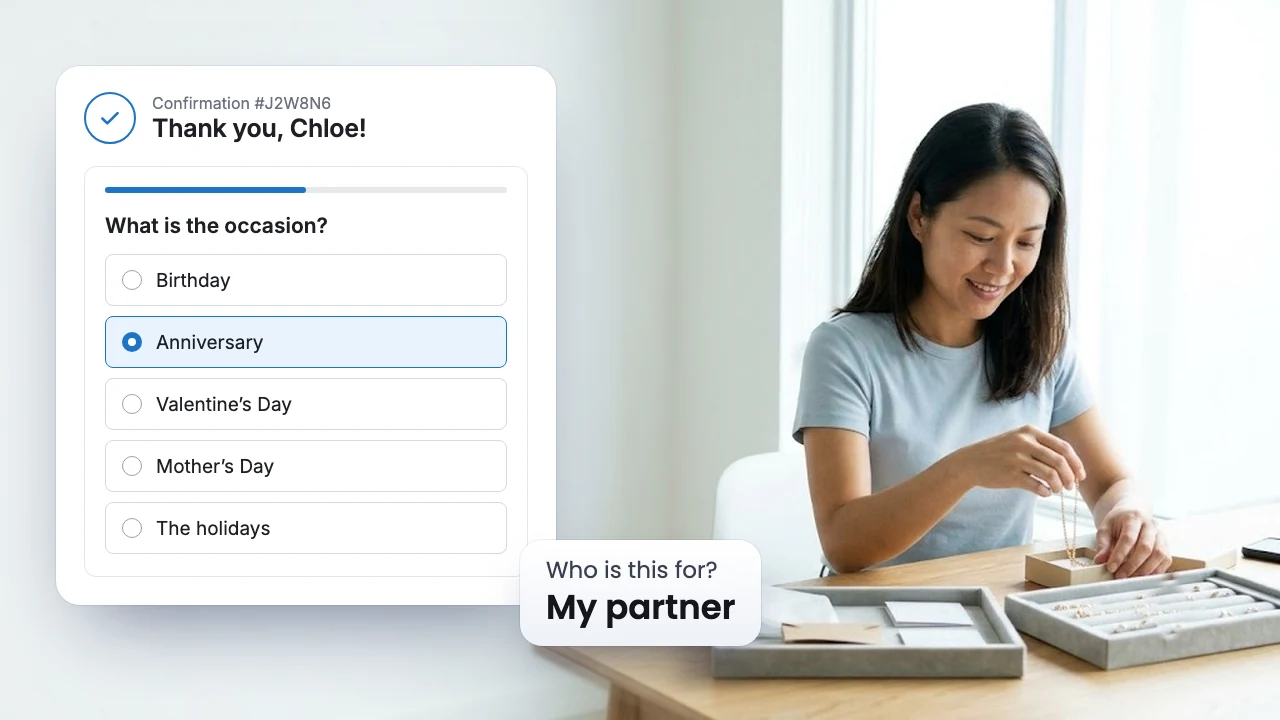
Five questions fill those gaps, four on the Thank you page and one in the post purchase email.
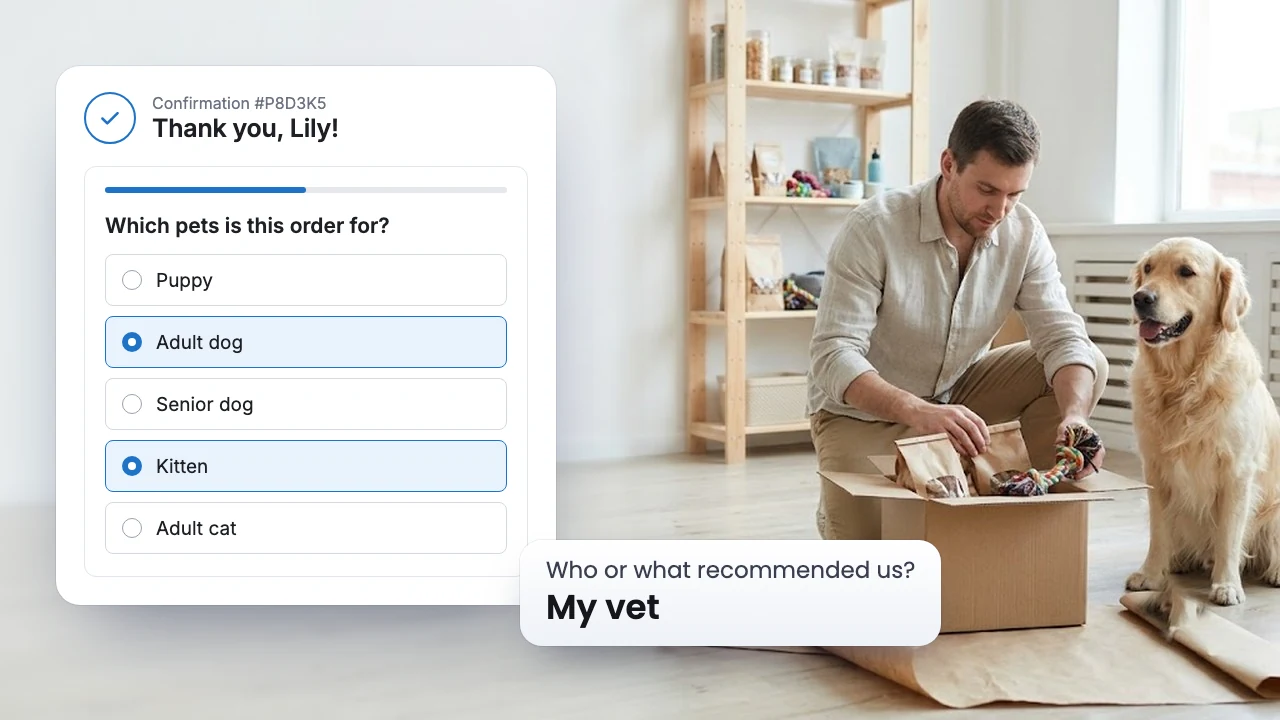
1. Who or what recommended us?
Vets, breeders and shelters start many pet purchases, and none of them leave a click. If many say a breeder or shelter, branching on the Growth plan shows a Short answer follow up only to those buyers, asking which one. Send the names that keep coming up a starter pack for new owners.
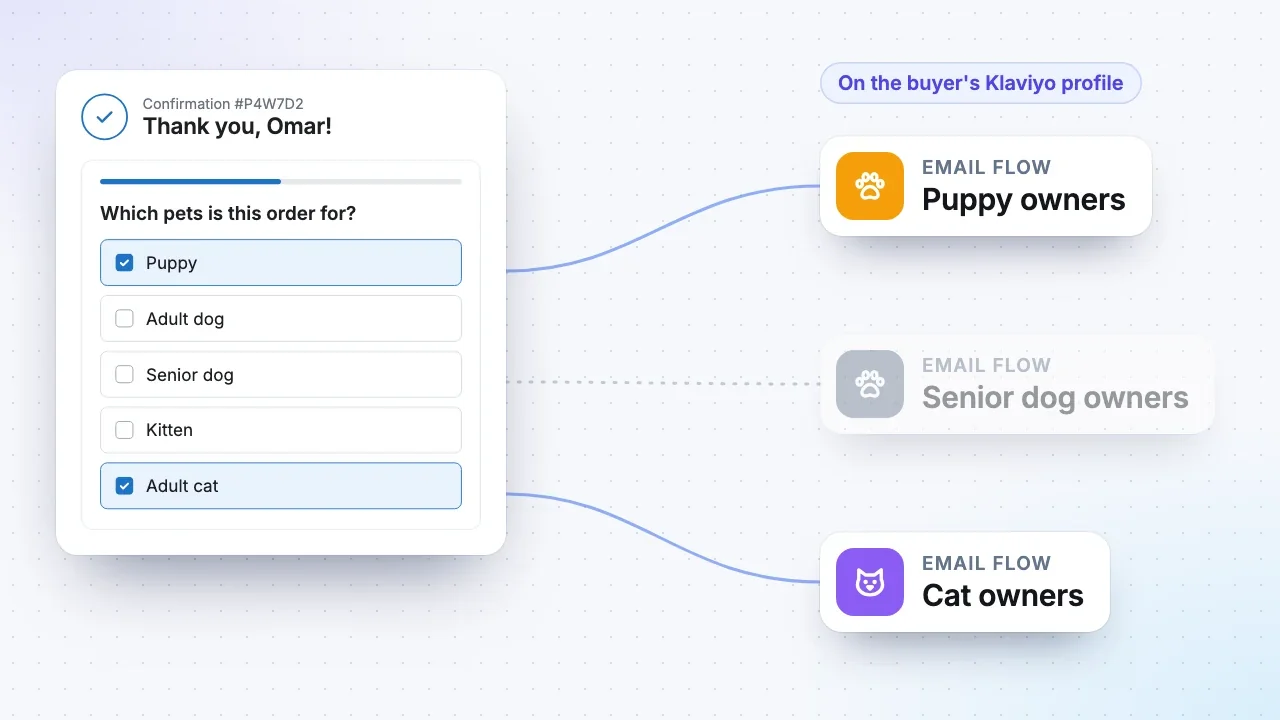
2. Which pets is this order for?
Species and age decide what the buyer needs next, and a cat owner who keeps getting dog emails learns to ignore you. If you sell to both dogs and cats, the Growth plan puts the response on the buyer's Klaviyo profile, so puppy, cat and senior dog owners each get their own flow.
3. What did your pet use before this?
Switchers show you which brands you win buyers from, and first timers need help to get started. If many switched from a supermarket brand, send a day two email on moving the pet to the new product step by step.
4. How long will this order last you?
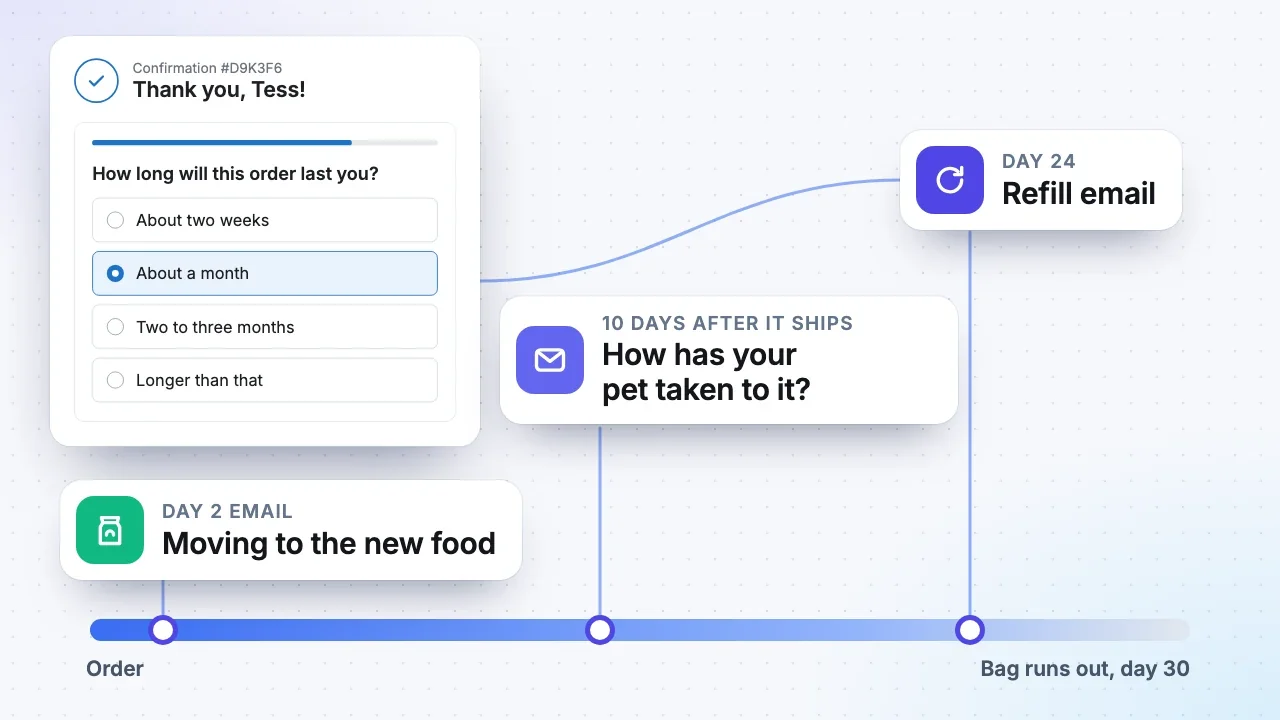
The buyer knows how fast their pet goes through a bag, so you know when the refill email should land. If most say about a month, send the refill email a few days before the order runs out, and offer a subscription with that rhythm.
5. How has your pet taken to it?
Pets are picky, and the owner only finds out after the first bowl, the moment that decides the second order. If many say "Will not touch it", a Short answer follow up on the Growth plan asks those buyers what happened. AI groups the written responses into topics, so you see whether the issue is taste, size or the switch.
When to ask
Four of those questions fit the Thank you page, and the fifth needs the pet to try the food first. SEA Survey is a post purchase survey app, and its post purchase email waits until the order ships, then for the delay you set in days.
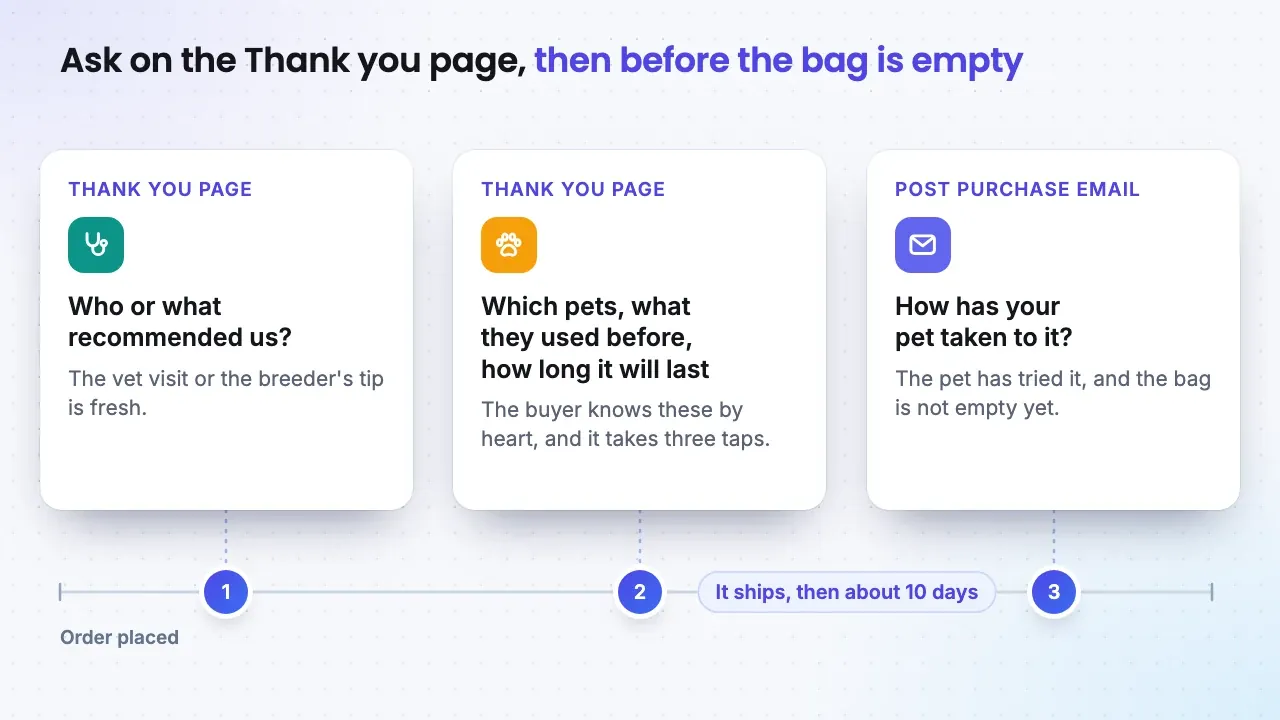
Who or what recommended you belongs on the Thank you page, while the vet visit or the breeder's tip is fresh. Which pets, what they used before and how long the order will last go there too, because the buyer knows these by heart and it takes three taps.
The check in email goes out about 10 days after the order ships, when the pet has tried it and the bag is not empty yet. These timings are our advice for pet supplies, not a measured rule.
Example: What a dog food brand would do
Say you sell air dried dog food online. This example is made up to show the steps.
The Thank you page survey shows a large group picking "A breeder or shelter", and the written follow ups keep naming the same three breeders. Most of those orders are for a puppy, and most buyers expect a bag to last about a month.
That gives you three moves. Those breeders get a starter pack with a card for each new owner, and puppy buyers get a day two email on moving to the new food step by step. The refill email lands on day 24 for buyers who said a month, and the check in email then shows whether fewer pets refuse the food.
Mistakes to avoid
Most of what goes wrong comes from the options you offer and the moment you ask.
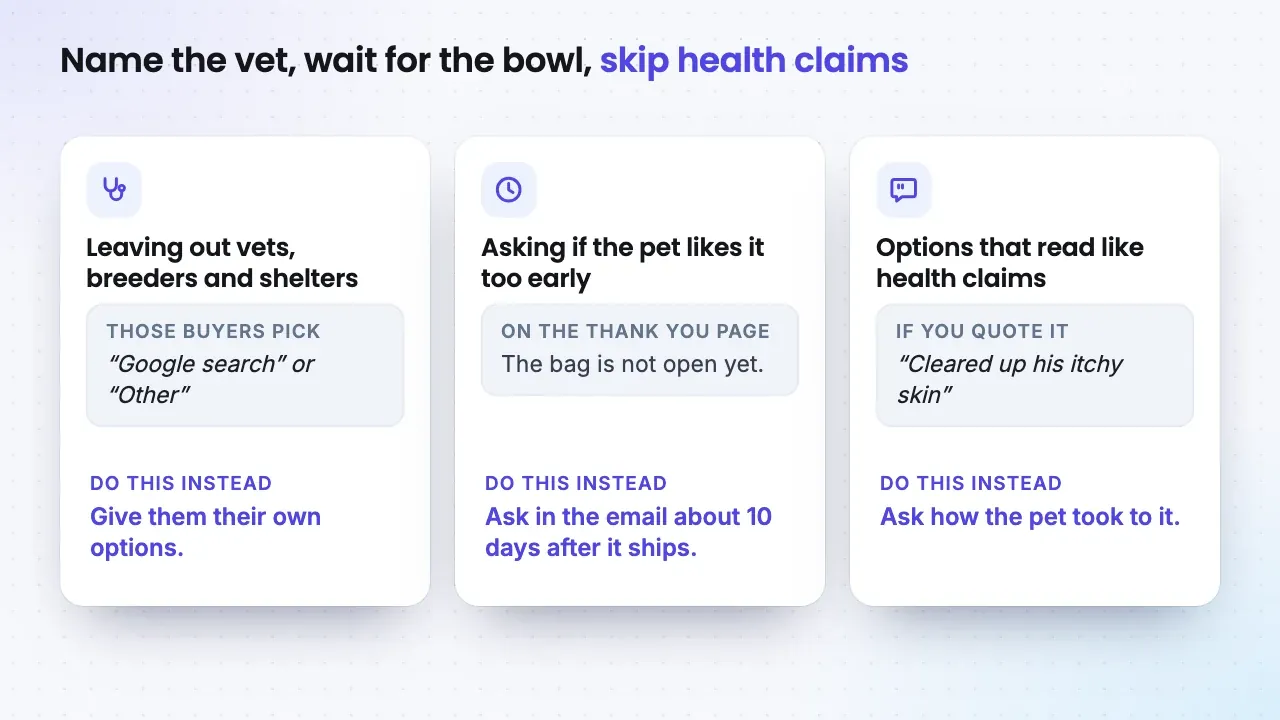
Leaving vets, breeders and shelters out of the attribution question loses the signal, because those buyers pick "Google search" or "Other".
Asking whether the pet likes it on the Thank you page comes too early, because the bag is not open yet.
Answer options can read like health claims: "Cleared up his itchy skin" sounds like a claim if you quote it. Ask how the pet took to it instead.
The Thank you page questions answer from the next order on, and the first check ins follow about 10 days after it ships. Answers on how long an order lasts then time each refill email to land before the bag runs out.
FAQ
What if a buyer has more than one pet?
Make the pet question Multiple choice, so a buyer with a puppy and an adult cat can pick both, and you see the whole household.
Does a survey slow down checkout?
No. The Thank you page shows after the order is placed, so the survey never stands between a buyer and paying.
Can I tag customers by pet?
Yes, the Sea Survey Submitted trigger in Shopify Flow can tag customers or orders by response, so a cat buyer can enter a cat flow in any tool that reads Shopify tags. The same trigger can add each response to a Google Sheet.