In short
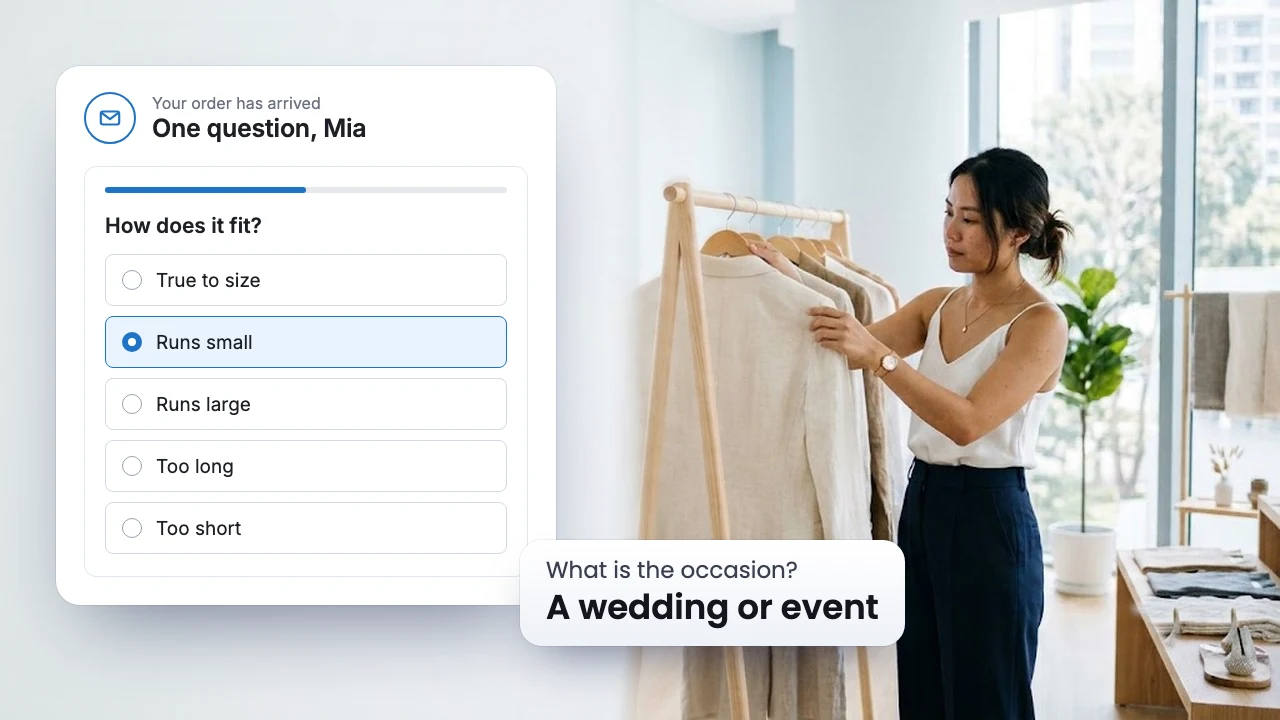
- Ask about fit as soon as the order arrives, with options that say what is wrong: runs small, too long, tight at the shoulders.
- Ask where buyers found you and what the occasion is on the Thank you page, while they still remember.
- Use the fit answers on the product page before the next buyer orders the wrong size.
What makes fashion different
Returns are the cost that defines online fashion. The NRF and Happy Returns 2025 Retail Returns Landscape expects 15.8% of all 2025 retail sales to come back, and 19.3% of online sales.
Fit is the usual reason. In McKinsey's 2021 survey of apparel retailers , 70% of returns came down to poor fit or style. McKinsey adds that retailers need return reasons that go well beyond "it doesn't fit".
Buyers also come back less often than in beauty or food. Klaviyo's 2024 State of Ecommerce report found that 51% of shoppers buy clothes and accessories only a few times a year, and 80% value access to product reviews. Each order, and each piece of feedback, counts.
What your reports miss
Your returns report says an item came back. It does not say that the blazer runs small at the shoulders, that the buyer needed it for a wedding on Saturday, or that they found you through a stylist's post. Those details decide your size notes, your product photos and where you spend. Here is how to ask the first question and read the answers.
The questions to ask
1. Where did you first hear about us?
- Why it matters: Fashion is found on Instagram, TikTok and Pinterest, and in the street. "Saw someone wearing it" is a real channel that no pixel records.
- If one network leads: Move content and budget there, and on the Growth plan check the revenue and repeat rate per channel before you scale it.
2. What is the occasion?
- Why it matters: An event buyer has a deadline and a different next purchase than an everyday buyer.
- If events lead: Show delivery dates near the button, and send event buyers a matching accessories email before the date.
3. How did you pick your size?
- Why it matters: It shows whether your size chart is doing its job before any return arrives.
- If many guess or size up to be safe: Add the model's height and size to every photo, and quote fit lines from reviews on the product page.
4. How does it fit?
- Why it matters: This is the return reason, captured before the return label. Each response is saved with the product the buyer ordered.
- If one item runs small: Add "runs small, size up" to that product page today, and send the notes to your supplier. A customer segment on product category sends the fit survey only to buyers of clothing, not accessories.
5. How likely are you to order from us again?
- Why it matters: Buyers order a few times a year, so you need to know early who will come back.
- If scores are low after a fit problem: Reach out with an exchange before they ask for a refund.
When to ask
In SEA Survey, the post purchase email waits until the order ships, then for the delay you set in days. Our advice for clothing:
| Moment | Question | Why then |
|---|---|---|
| Thank you page | Where did you hear about us, occasion, how you picked your size | They decided a moment ago, and the reasons are fresh |
| Email a few days after the order ships | How does it fit? Would you order again? | The parcel has arrived and they have tried it on |
Example: what a womenswear label would do
This example is made up to show the steps. Your own responses decide.
Say you sell linen blazers and dresses. The fit question shows that one blazer keeps coming back as "Runs small", while the dresses are mostly true to size. On the Thank you page, many blazer buyers say they guessed their size, and the occasion is often work.
That gives you three moves. Add "runs small, size up" and the model's size to the blazer page. Ask your supplier to check the shoulder pattern for the next run. Send work buyers a styling email with trousers that match. The fit answers for the next batch tell you whether the note worked.
Mistakes to avoid
- "How was your order?" instead of a fit question. A vague question gets a vague answer. Name the problems that cause returns.
- Asking about fit on the Thank you page. Nobody has tried it on yet.
- One "Social media" option. Instagram, TikTok and Pinterest bring different buyers, so split them.
FAQ
Can I ask the fit question only for some products?
Yes. A customer segment can target a product or a product category, so the fit survey goes to dress and blazer buyers and skips belts and bags.
Does a survey slow down checkout?
No. The Thank you page shows after the order is placed, so the survey never stands between a buyer and paying.
Can fit answers go to Klaviyo?
Yes, on the Growth plan. Each question becomes a property on the buyer's Klaviyo profile, so a "Runs small" buyer can get a size help email.
Sources: NRF and Happy Returns, 2025 Retail Returns Landscape, October 2025. McKinsey, Returning to order, May 2021. Klaviyo, 2024 State of Ecommerce, fashion. Timing in this post is our advice, not a measured rule.