In short
- Ask how long buyers thought about it and what tipped the decision. The last click rarely tells you either.
- Add "Saw it in a store or showroom" as an option, because many home buyers look in person and buy online.
- Ask how it looks once it is in place, after delivery, when the buyer can judge it in the room.
What makes home and garden different
Home buyers do not buy often, and they take their time. Klaviyo's 2024 State of Ecommerce report found that 56% of home and garden shoppers buy only a few times a year. Search influences 80% of them and email 60%.
The research often happens offline. In the same report, 74% of home and garden companies earn revenue from physical stores, and 65% of shoppers buy in person at branded stores. A buyer who touched the sofa in a showroom and ordered it online a week later shows up in your reports as direct traffic.
Projects drive the spend. The 2026 U.S. Houzz and Home Study puts the median renovation spend at $20,000 in 2025, with a planned median of $15,000 for 2026. A buyer furnishing a new kitchen needs different next products than one buying a gift.
What your reports miss
Your analytics see the session that ended in an order. They cannot see the four weeks of looking before it, the showroom visit, or the photo from a buyer that settled it. Those answers decide which content you make for the long middle of the decision and where you spend. Here is how to ask the first question and read the answers.
The questions to ask
1. Where did you first hear about us?
- Why it matters: Showrooms, magazines and Pinterest boards start many home purchases, and none of them leave a click.
- If many say a store or showroom: Make the product page match what buyers saw in person, with the same names, finishes and sizes, and mention your showrooms in ads.
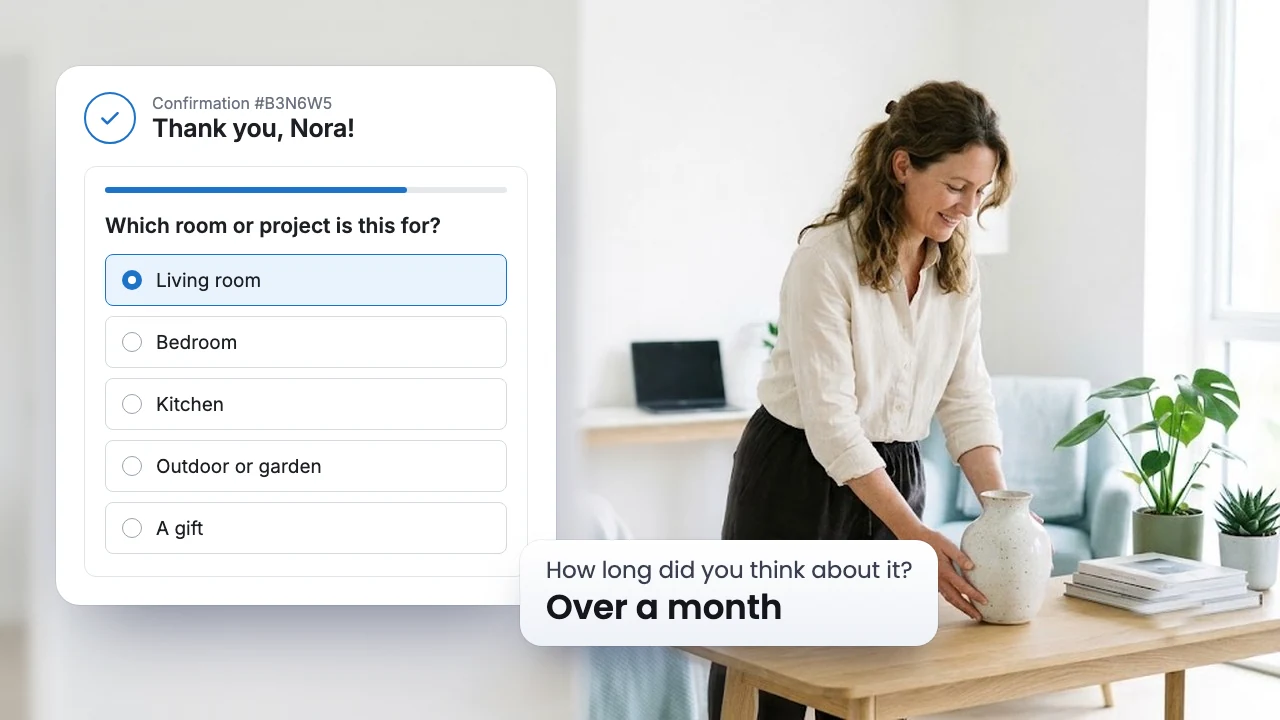
2. How long did you think about this purchase?
- Why it matters: It tells you how long your follow up needs to last. A one week browse abandonment flow is too short if most buyers take a month.
- If most take over a month: Stretch your browse and cart emails over several weeks, and send content that helps them decide, such as room ideas and care guides.
3. What finally convinced you?
- Why it matters: It names the thing that ends a long decision, which is the thing to lead with.
- If reviews and photos lead: Show buyer photos near the price, and ask your next buyers for theirs. If a sale leads, plan your launches around it.
4. Which room or project is this for?
- Why it matters: The room tells you what the buyer may need next. A kitchen buyer and a garden buyer want different emails.
- If one room leads: Build a collection page for it and an email that shows matching pieces. On the Growth plan the answer lands on the buyer's Klaviyo profile, so each room group gets its own flow.
5. Now that it is in place, how do you rate it?
- Why it matters: Color, size and finish only show in the room. A rating after setup catches what the photos got wrong.
- If one product scores low: Read the written answers, which AI groups into topics. If buyers say the color looks different, add photos in daylight to the product page.
When to ask
In SEA Survey, the post purchase email waits until the order ships, then for the delay you set in days. Our advice for home and garden:
| Moment | Question | Why then |
|---|---|---|
| Thank you page | Where did you hear about us, how long you thought about it, what convinced you, which room | The long decision is over, and the reasons are fresh |
| Email about a week after the order ships | How do you rate it now that it is in place? | Large items take longer to arrive and set up |
Example: what an outdoor furniture brand would do
This example is made up to show the steps. Your own responses decide.
Say you sell teak garden sets and spend most of your budget on Google Shopping. The Thank you page survey shows that many buyers thought about it for over a month, and a large group picks "Reviews and photos from buyers" as what finally convinced them. Most choose outdoor or garden, and a few name a store where they saw the set.
That gives you three moves. Stretch the browse abandonment flow to four weeks, with buyer photos in each email. Ask happy buyers for a photo of the set in their garden, and put the best ones near the price. Ask the store you keep hearing about whether it would carry more of the range. The next round of answers tells you whether the decision gets shorter.
Mistakes to avoid
- Leaving out offline options. Without "Saw it in a store or showroom", those buyers pick "Google search" or "Other", and you lose the signal.
- Asking for a rating before delivery. Big items can take weeks to arrive, so set the delay in days to match.
- Short follow up flows. A buyer who takes a month needs reminders that last a month.
FAQ
Should repeat buyers see the same questions?
No. A customer segment can use Lifetime order, so first time buyers get the attribution survey and repeat buyers get a different one.
Does a survey slow down checkout?
No. The Thank you page shows after the order is placed, so the survey never stands between a buyer and paying.
Can I tag customers by room or project?
Yes. The Sea Survey Submitted trigger in Shopify Flow can tag customers or orders by answer, so a kitchen buyer can get a kitchen flow in any tool that reads Shopify tags.
Sources: Klaviyo, 2024 State of Ecommerce, home and garden. Houzz, 2026 U.S. Houzz and Home Study, April 2026. Timing in this post is our advice, not a measured rule.