
In short
- Attribution shows which ads came before a sale, not which caused it, so retargeting can take credit for sales that would happen anyway.
- A lift test holds ads back from some people or regions and counts the sales the ads caused.
- Media mix modeling estimates each channel's effect from spend and sales over months, so it suits large budgets.
- A post purchase survey app covers what all three miss: The friend, the creator or the AI chat that left no click.
Credit is not cause
A retargeting ad shown to someone with a full cart gets credit for a sale that was likely to happen anyway. Every attribution report, in Shopify, GA4 or an ad account, shows which ads came before a sale, not which ads caused it.
What is marketing attribution? explains how those reports split the credit and why they never agree. Even when the tracking works, none of them can say whether the sale would have happened without the ad.
The error runs both ways. Haus, a company that runs lift tests, looked at 640 Meta tests by large brands and found that Meta's 7 day click results understated its real effect on direct to consumer sales by 15% on average. Credit alone is a weak guide for moving the budget of a large channel, up or down.
Meta itself calls lift experiments like its Conversion Lift the gold standard of measurement.
How a lift test works
A lift test holds the ads back from a random group of people, or from a few regions, and compares their sales with the group that saw the ads. The difference is what the ads caused.
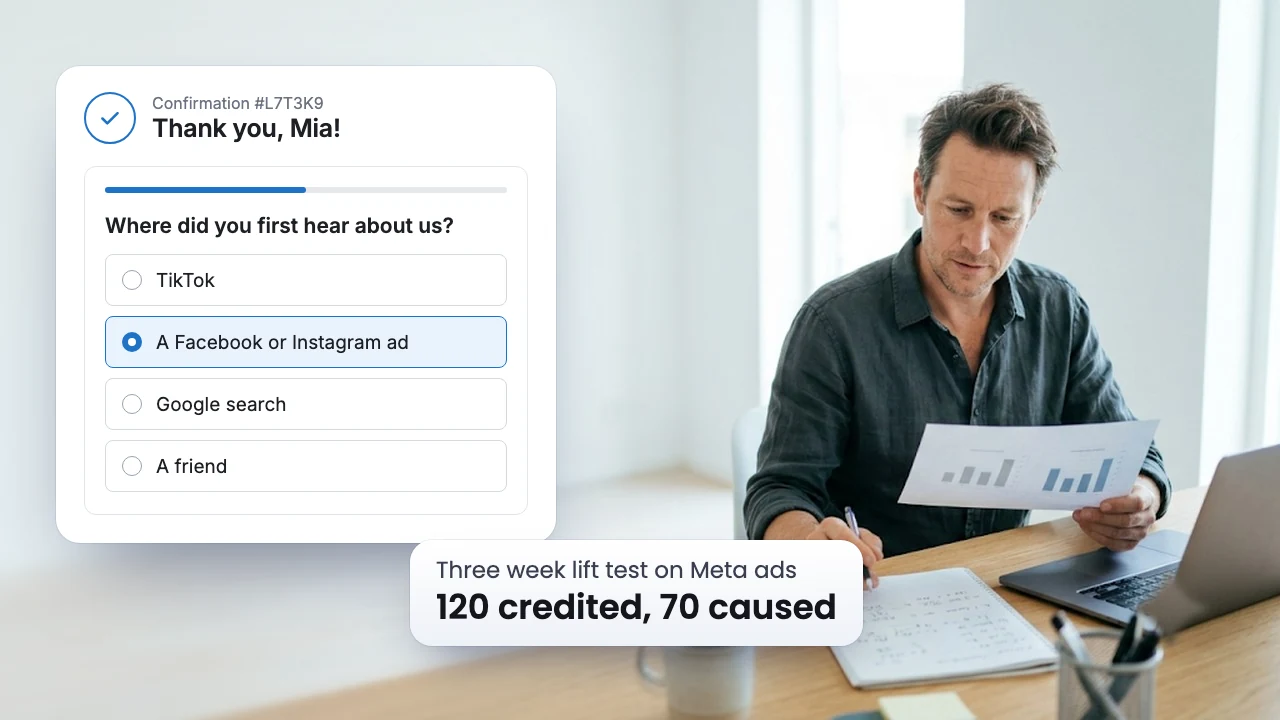
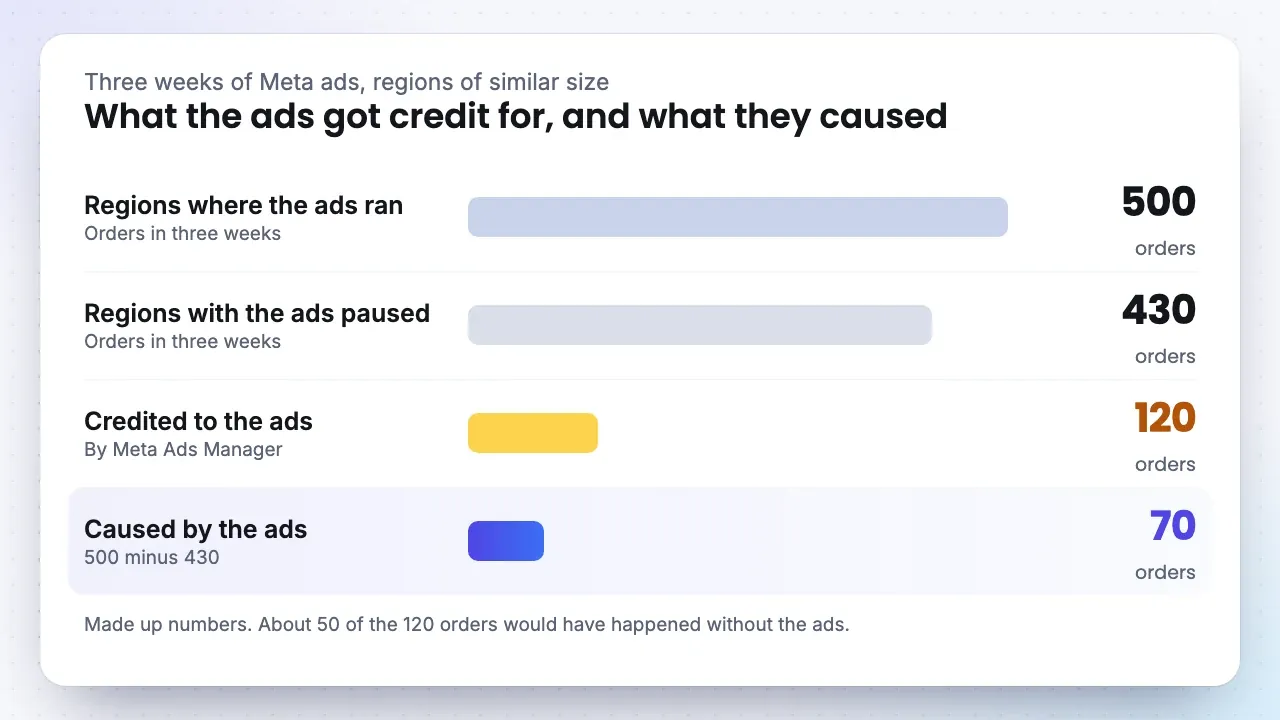
Say you pause Meta in a few regions for three weeks. Regions where the ads kept running take 500 orders, and similar regions without them take 430, so the ads caused about 70 orders. Meta Ads Manager credited itself with 120 in the regions where they ran, and the rest would have happened anyway.
Google Ads offers Conversion Lift studies as well, and the entry point for a study dropped to a $5,000 budget in late 2025. On a smaller budget, the same idea works by hand, by pausing one channel in a few regions for two to four weeks and comparing their sales with similar regions where it kept running.
A test needs weeks, budget and a group that sees no ads. That makes a regional lift test a job for January, not for the middle of the sale.
Media mix modeling works from the other end
Media mix modeling (MMM) estimates each channel's effect from spend and sales over time, without following any person, so privacy settings hide nothing from it. The person level trail breaks often: Only 38% of iPhone users agreed to tracking in early 2026, Adjust found, and Safari deletes cookies set by scripts after 7 days without a visit.
The price is data. MMM needs months of history across several channels and does not judge single ads, so it suits stores with large budgets across many channels.
What each method can prove
Each method answers its own question, and each has a weak spot.
| Method | The question it answers | Good for | Weak spot |
|---|---|---|---|
| Click attribution in Shopify, GA4 and ad accounts | Which ads and visits came before the sale? | Tuning bids, ads and campaigns day to day | Misses what leaves no click, and credits sales that would have happened anyway |
| A post purchase survey app | What does the buyer say brought them? | Channels that leave no click, like friends, creators, podcasts and AI chats | Some buyers misremember, and only buyers respond |
| Lift test | Would the sale have happened without the ads? | A big channel you are unsure about | Needs weeks, budget and a group that sees no ads |
| Media mix modeling | How does spend move sales over months? | Large budgets across many channels | Needs months of data and does not judge single ads |
Click attribution in Shopify, GA4 and the ad accounts is the daily tool. It tunes bids, ads and campaigns, but it misses what leaves no click and credits sales that would have happened anyway.
A lift test answers whether the sale would have happened without the ads, one big channel at a time. Media mix modeling answers how spend moves sales over months, across many channels at once.
Lift tests and MMM still measure ads and spend, while plenty of sales start with no ad and no click at all. A creator mentions you without a link, a friend shows the product at dinner, or ChatGPT suggests your store, and the reports hand the sale to Direct or Google search.
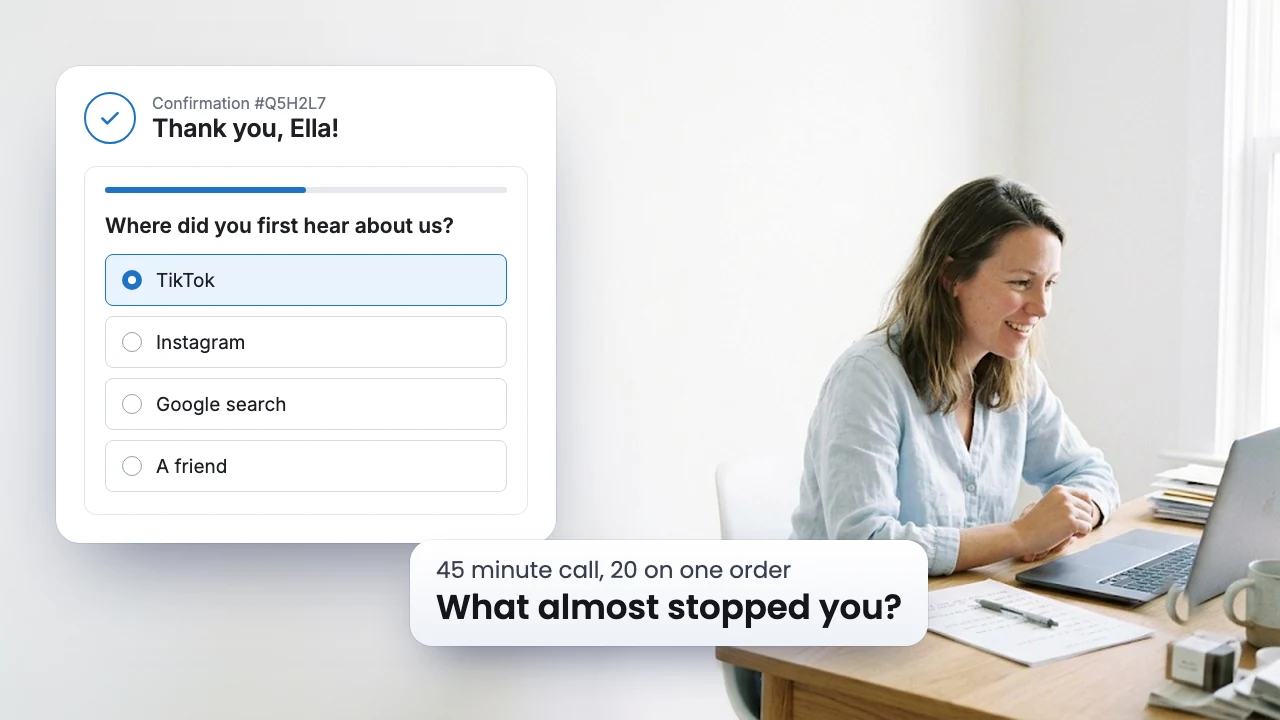
SEA Survey is a post purchase survey app for Shopify that asks the buyer on the Thank you page and saves each response on its order, next to the revenue. It catches the friends, creators, podcasts and AI chats that no click shows, with one question: "Where did you first hear about us?"
Its weak spot is memory. Some buyers misremember, and only buyers respond, so the responses read best as shares of buyers over several weeks, beside the click data and not instead of it.
Which one fits your store
The click reports a store already has tune campaigns every week. A post purchase survey app adds the channels that leave no click, and its responses build up one order at a time.
A lift test fits a big channel you are unsure about, especially when Shopify's attribution, GA4's first user source and what buyers said disagree on it. Below the $5,000 entry point of a Google Ads study, a regional pause answers the same question.
Media mix modeling fits large budgets across many channels, with months of data behind them.
The order follows the calendar. The survey question goes live before Nov 27, the sale runs on click attribution and buyer responses, and a lift test on any large channel they disagree about waits for January.

SEA Survey
Listed as SEA Post Purchase Survey Quiz, 4.9 stars from 190 reviews, with the Built for Shopify badge.
30% off any paid plan for 3 monthsStarter $13.30 instead of $19, Growth $34.30 instead of $49
BFCMSEA30Last day: Dec 7
- Why now: Responses build up one order at a time. Start before Nov 27, and your Black Friday buyers are in the data when you plan January, including the ones no click report gave to the right channel.
- On the Free plan: 30 responses a month, with attribution, NPS and CSAT surveys.
- What a paid plan adds: Starter counts 500 responses a month. Growth has unlimited responses and the Marketing attribution dashboard, with revenue and LTV by the channel buyers named, plus A/B testing and conditional logic.
- How to claim: Install SEA Survey from the Shopify App Store, open Plans, paste the code and pick Starter or Growth. Both start with a 7 day free trial.
FAQ
What is the difference between attribution and a lift test?
Attribution shows which ads came before a sale, while a lift test shows whether the ads caused it, by comparing sales from people or regions that saw the ads with sales from those that did not. Attribution tunes campaigns every week, and a lift test checks a large channel you are unsure about.
Is a post purchase survey accurate enough?
It is accurate about what clicks cannot see, which is what the buyer remembers bringing them to you. Responses read best as a share of buyers over several weeks, beside your click reports.
What if I also sell in a mobile app?
A mobile measurement partner (MMP) such as AppsFlyer, Adjust or Branch gives each app install to one network, usually the last tap, while iPhone users who decline tracking are measured through Apple's SKAdNetwork and AdAttributionKit, which report installs by campaign, without user or device detail. AppsFlyer counts an install for 7 days after an ad tap by default, and someone who reinstalls inside its 90 day reattribution window is not a new user.